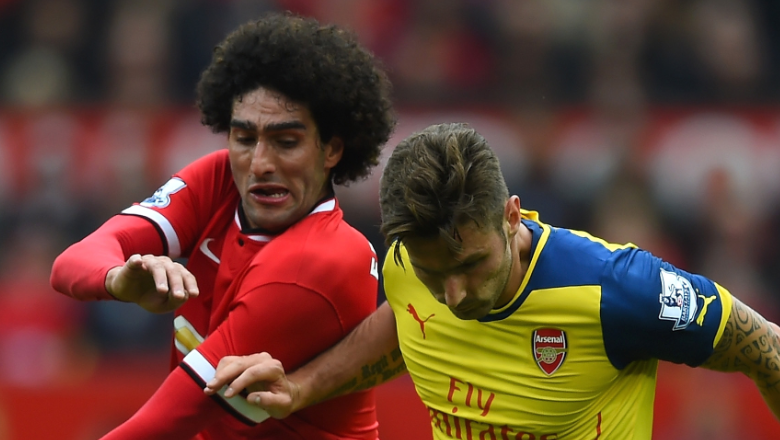
Try to imagine the scenario: 28th of May 2016, Stadium San Siro, Champions League final. Barcelona and Manchester United meet for the third time in just seven years to decide which team will take the Champions League trophy. The game is tied at the start of extra time, but Barcelona are dominating the midfield with ease and it’s just a matter of time until they create another big goalscoring chance. Van Gaal expectedly notices his team are missing the power and steel in the duel, so he decides to bring on Marouane Fellaini for the final half-an-hour, hoping the big Belgian can make an impact and stop endless passing between Rakitic, Iniesta, Busquets and Messi. Some of the United fans are revolted at first, but they understand there are no many options left on the bench and something needs to change.
In the 92nd minute, Fellaini thrashes Busquets in his first contribution to the game, but the referee gives only a talking-to, knowing the theatrics Spanish midfielder is capable of and the fact United player committed only one foul so far. The fear starts to creep in Barcelona team; they are not really comfortable or familiar playing against such a player, who they know can also be quite dangerous from the set-pieces. That’s exactly what eventually happens; 118th minute, Di Maria whips in another corner, Fellaini jumps high in the air, beating Pique to it and heads the ball into the net with his recognisable afro. United players and fans are in delirium, aware of the fact they are on the brink of the European title, all thanks to player who went through quite a turnaround in the red shirt. United hold on, the fans are going crazy, De Gea decides to sign a 4-year-contract, Bale puts in a transfer request wishing he will join European Champions…
Fairy tale stories are very rare in the modern football and it is questionable would this potential script even be categorised as one knowing the wages footballers receive these days, but this wouldn’t be far from it. Fellaini was stigmatised from day one, being connected to everything negative that happened during David Moyes’ short reign. His transfer fee wasn’t helping either; Woodward and Moyes overpaid the release clause he had at Everton, putting more pressure on the only signing of the 2013 summer transfer window. To say Fellaini had a good first season at United would be ridiculous, but it would be equally ridiculous to deny he showed some quality performances in United shirt, despite not scoring a single goal. (Arguably) away man-of-the-match displays in the Champions League like against Shakhtar and Real Sociedad (despite injury-time sending-off) spring to mind, where Fellaini imposed himself as a reliable physical presence, something United missed the previous season even in the games they won. Looking back in time, the pressure of Old Trafford seemed to be too much for often blamed Belgian and last season was no different. After all, his renaissance began with the thunder-strike at the Hawthorns and kick-started a series of good performances.
The differences between Moyes approach and Van Gaal approach are numerous. While Moyes believed Fellaini can be the ultimate central midfielder, almost Roy Keane-type one, who could dominate the game both attackingly and defensively, the Dutchman turned him into a task-player. Although the logical conclusion would be that kind of one-dimensional players don’t start every week (Park Ji-Sung as a perfect example), United often struggled to create much chances so route-one approach in the moments United simply needed to score meant knocking the ball to Fellaini’s head. United fans often berated “negative approach to football” laying the blame on ‘the tool’ rather than ‘the master’, regardless of level of success that method brought.
Nevertheless, Fellaini ended the season as the vital part of the midfield and earned Van Gaal’s trust, who said in April: “From the first training session he has done everything I have asked. He has been very open to what I have said and he wants to perform. We can change the system but the way he is playing, I cannot change [bench] him. He can give a lot of balance to the team.” Only a few days later, Fellaini put in probably the best personal performance in United shirt, playing to his strengths, nullifying usually inspired Yaya Toure and scoring the headed goal that put the home side ahead. He did everything his manager asked of him and that reliability, something every trainer-coach longs for, helped the staff to put together all the jigsaw puzzles into a functional unit.
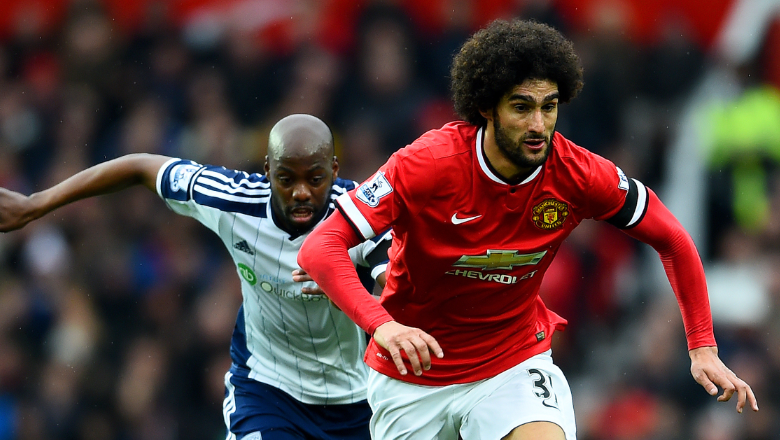
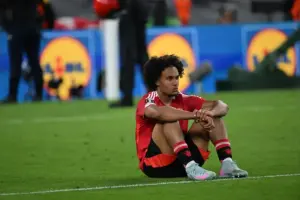
Fellaini is having an almost identical impact on hugely talented Belgium team. With the players like Hazard and De Bruyne around him, he is not expected to produce magic with the ball and he concentrates on tasks he does best. His headed winner against Algeria at the latest World Cup is the prime example, but more recent performances implicate it even more. A total of five goals in the last three Belgium victories cannot go under the radar as Fellaini cemented his inclusion in Marc Wilmots’ starting line-up. Attacking midfield position suits his game, whether against weaker opposition like Cyprus or giants like France and Van Gaal undoubtedly noticed his contribution and hopefully will know to use it in the coming season.
Fellaini himself said on a couple of occasions he sees himself as a defensive midfielder, but for now his wish might remain unfulfilled. There are still a few things 6 ft 4 player needs to improve. Tracking back to his position is the main issue for Fellaini, as his neither concentration nor stamina reach the standards set by top midfielders. Passing (range and preciseness) is another one, maybe more connected to his temporal level of confidence he possesses. Quality pre-season tour and set of trainings can help him in that pursuit, making him more familiar with the mental and physical demands.
Also, his stature and occasional clumsiness are often too much of an influence to referees, resulting in quite a number of needless fouls and cards, which frustrate fans as well as Fellaini. His use of elbows is often too aggressive and it’s obvious he needs to be more clever in those situations. The red card on the last day of the season, when he stamped on Paul McShane means he will miss the first three league games, which is a real set-back having in mind United are trying to bring in another midfielder. Despite his age (27), the impression is Fellaini is still learning (like every player should do) and another European campaign will surely help him in collecting the experience he needs to become more rounded player.
Fellaini will never become a skilful, midfield maestro with stunning technique, but he possesses qualities other players don’t and he should be used according to those.
Fellaini can truly become a world-class in a game-changer role, whether he comes in from the bench to provide the height and heading ability or he starts the game in a precise system in which everybody know what they are doing. Running into the channel between the right-back and the centre-back in counter-attacking situations, positioning himself on the far post awaiting for a cross, beating his opponent to the ball with his physical strength as well as his admirable dedication are just a few of characteristic Marouane Fellaini has become recognisable of and that in itself makes him a player worth of respect by both United fans and opposition teams.

Comments.
Loading comments…