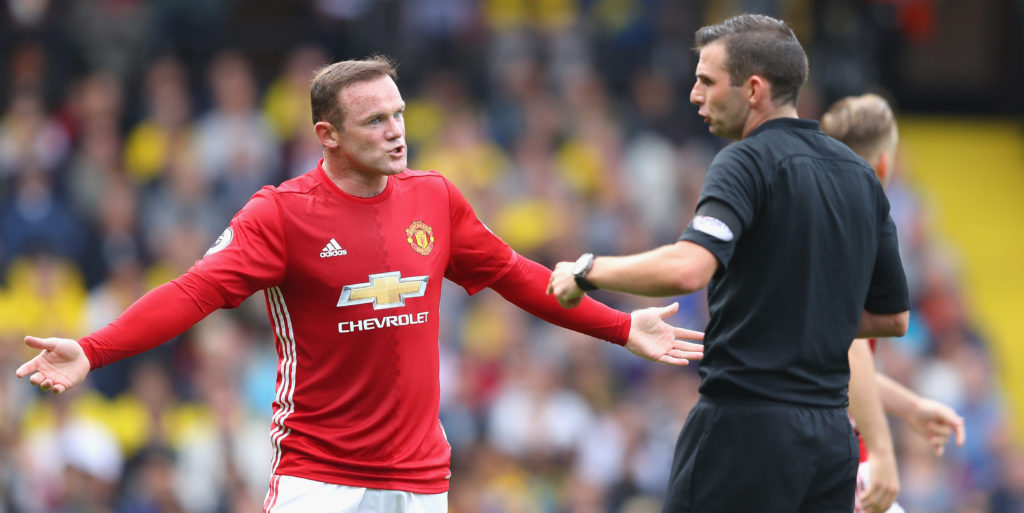
Wayne Rooney’s relationship with Manchester United and its supporters is an interesting one. On the one hand, he is the club’s record goalscorer in the Premier League, close to surpassing Sir Bobby Charlton’s long-standing goal haul, has won every possible honour and is the current club captain.
Yet, for some supporters, Rooney doesn’t quite fall into the legendary category that his achievements, on paper at least, deserve. In fact, he has become a divisive figure amongst many supporters. He has aggrieved many fans with his two previous transfer requests and although several years have passed since then, such acts of disloyalty are not easily forgotten. Whilst football supporters never forget those who perform heroically, they also find it difficult to forgive those who betray them.
Even though, on both occasions of his desire to depart Old Trafford, Rooney was persuaded to stay and committed his future to United, there is a feeling that his form and performances have waned since then. He signed a contract in late 2013, whilst David Moyes was in charge, for a reported £300,000 per-week. Since then his performances have done little, in the eyes of many, to justify such a huge and significant outlay.
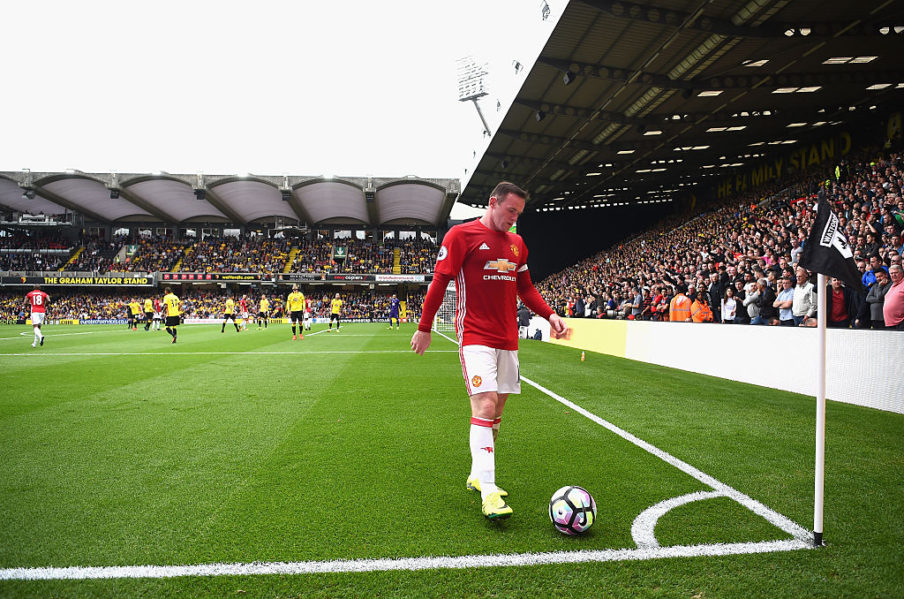
Does Rooney warrant a place in the new Manchester United that Jose Mourinho is trying to build? As Mourinho tried to sign Rooney when he returned to Chelsea during the summer of 2013, you would think that he will certainly be given a chance to prove his worth. On form, the England captain is a terrific player, a throwback to the street footballer who succeeds in the professional ranks- something that is considered a rare commodity within the modern game. You don’t play over 500 matches and score nearly 250 goals for a club like Manchester United, especially in their most successful era, without being a world-class footballer.
Perhaps a cause of the debate in whether Wayne Rooney is still worthy of a place in the United team is the confusion surrounding his best position. Is he still an attacker, as he has been most of his career, or should he relocate to central midfield, a position that he is known to favour. He finished the previous season in a midfield role and was also deployed there in England’s Euro 2016 campaign. Could that be where Rooney finds a more permanent place?
Although he is capable of playing passes reminiscent of former maestro Paul Scholes and has the desire and energy to get on the ball in the middle of the pitch, he has always felt like a stop-gap when playing in central midfield. He’s a useful option when absences force the manager’s hand but I cannot see him being good enough to hold off the challenge of more superior, and natural, midfielders. Jose Mourinho appears to be of the same opinion as he declared, shortly after his arrival, that Rooney would return to his more advanced role in attack. Again, there are doubts about whether he can still make an impact in an attacking position. It is strange to question if such a great goalscorer can continue to find the net, but as Rooney moves into his 30s, it is a necessary one to ask.
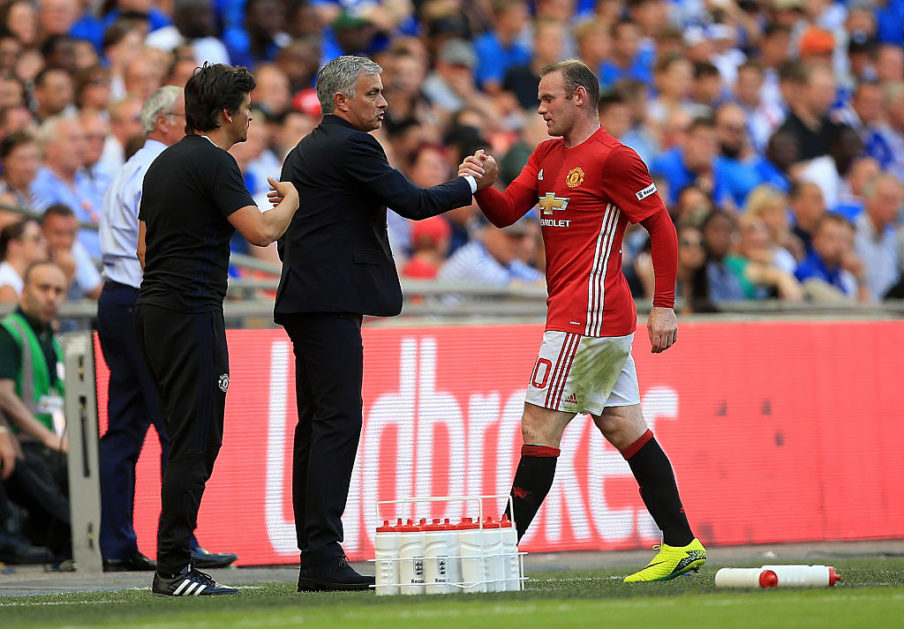
The potential issue could lay in Rooney’s willingness to change position and make more of an impact on the pitch. Although it is admirable for a player to desire to increase his influence on making his club successful, it may also hinder their progress and cause them to lose their positional instinct. This is what could have happened with Wayne Rooney. Using Cristiano Ronaldo as an example, the Portuguese was once a marauding winger but now appears to be more of out-and-out goalscorer, finding himself as more of a poacher than when he was younger.
Taking the physical limitations that come with age, Ronaldo has decided that the best way for him to continue to improve and be a top player is to become more of a centre forward. Whilst he used to be a scorer of great goals, he is now a great goalscorer. Rooney could definitely follow his former teammate’s lead and narrow down his position to centre forward. His goal tally backs up his natural scoring instinct and it is in that position where he could have the most influence on the success of the team.
One of the problems that Rooney has continually had at United is that his versatility, and willingness to sacrifice for the team, has seen him moved aside to accommodate other (and possibly less willing) star players. He was always pushed out into a wider position when Ronaldo was in the team as he could be trusted to do the defensive work more diligently than the Portuguese attacker and found himself playing second fiddle to Robin van Persie in the 2013 title-winning campaign. Although he would be best suited to playing in a centre forward position, he would now have to contend with Zlatan Ibrahimovic, a player who has dedicated himself to scoring goals. Comparing Rooney’s recent goal output with Zlatan (though it is worth remembering that Ibrahimovic was playing the French Ligue 1 which is clearly weaker than the Premier League) shows clearly that the Swede is the more efficient and free-scoring forward (In the time Zlatan scored 156 goals for Paris Saint-Germain, Rooney managed 64 for United).
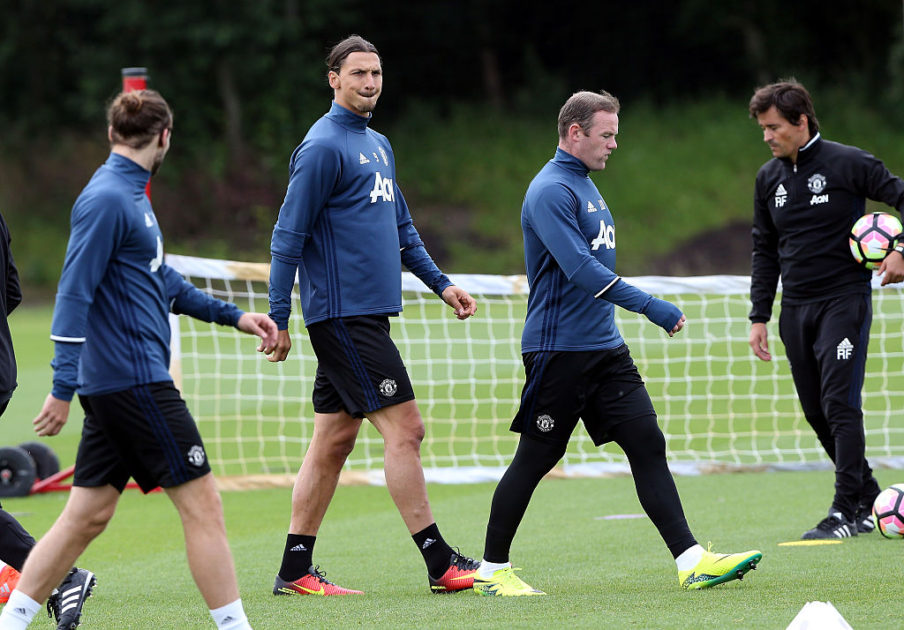
Should we really punish Rooney for the fact he is more of a team player than an individual star? Is it a sign of a lack of ability in comparison to those world class players? It is worth considering that when called upon, Rooney has always put the team first and been happy (or at least willing) to sacrifice personal honour for the collective glory of the team. That in itself makes him a hugely valuable player and one worthy of praise.
It is worth taking into consideration that Rooney has been, at times, considered the main man at Manchester United. He can probably count himself rather unfortunate that his two best seasons, on a personal level, have been relatively unsuccessful ones for the club. He scored 34 goals in both the 2009/10 and 2011/12 campaigns and has only a League Cup triumph to show for it. Rooney carried the burden of expectation marvellously well in season following the departure of both Ronaldo and Carlos Tevez in 2009.
Although Ferguson had brought in Dimitar Berbatov the previous summer, the Bulgarian had, for all his obvious skill, failed to show that he could really fill the void left by two truly excellent players. With limited recruitment that close season (only Antonio Valencia and Michael Owen were the signings of any note), Wayne Rooney was expected to lead United to further success. This was arguably the season where we saw Rooney at his best, he was an absolutely outstanding forward and deserved to be considered one of the world’s best players.
Such was influence on the team’s fortunes, the ankle injury he suffered in Munich during United’s first leg of their quarter final tie against Bayern effectively saw the side miss out on both Premier and Champions League titles that year. Although he returned in the second leg (he was clearly subdued and in some discomfort from the injury), Rooney’s absence in the title clash with Chelsea, which United lost 2-1, pretty much ended any hopes of a record fourth consecutive crown.
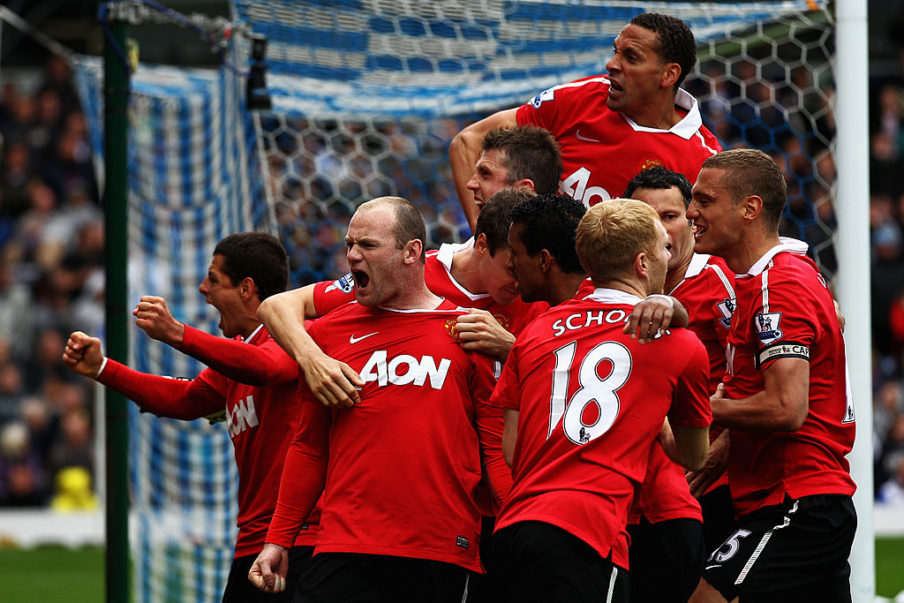
The striker’s memorable form in 2011/12 has also been overshadowed by collective disappointment and lost in the dramatic final day when Manchester City stole the title. Again Rooney rediscovered his goalscoring form of two seasons ago but like in 2009/10, it was not enough to propel the club to major honours.
We might find the heart of the Wayne Rooney dilemma, not in his ability on the pitch, but in his conduct off of it. A sense of betrayal still lingers in the mind of many supporters following the two transfer requests submitted by the player. The first attempt to force a move came in late 2010 and sent shockwaves throughout football. A move to newly-rich neighbours Manchester City was touted as Rooney argued that his current club wasn’t moving in the right direction, or certainly not one that matched his own personal ambitions.
Whilst it is fair to say that the club had hardly invested heavily in the two years since receiving a then world-record £80 million for Cristiano Ronaldo, his apparent disappointment in United’s failure to land Mesut Ozil (who also went to Real Madrid) was both bizarre and disrespectful. Ferguson, who gave an interview where he expressed his shock and bewilderment with Rooney’s decision, rightly told the forward to concentrate on playing and not on the club’s transfer policy. Even though his second wish to leave in 2013 still rankled with many, it contrasted with the first as in 2010, Rooney was by far United’s most valuable player.
That title had diminished somewhat by the time Ferguson departed (he was still important but less so with the arrival of Robin van Persie the summer before) but there is a strong sense that Rooney held the club to ransom at a time when he knew they couldn’t afford to lose him. As pleasantly surprising as it was to see him change his mind and stay, the fact he would be earning an incredible amount more a week hardly endeared him to supporters who were finding it hard to forgive him. We are all aware of the money being paid at the top level of the game but seeing a player give off the impression that it is what is most important to them, is most definitely not the best way to get them on your side.
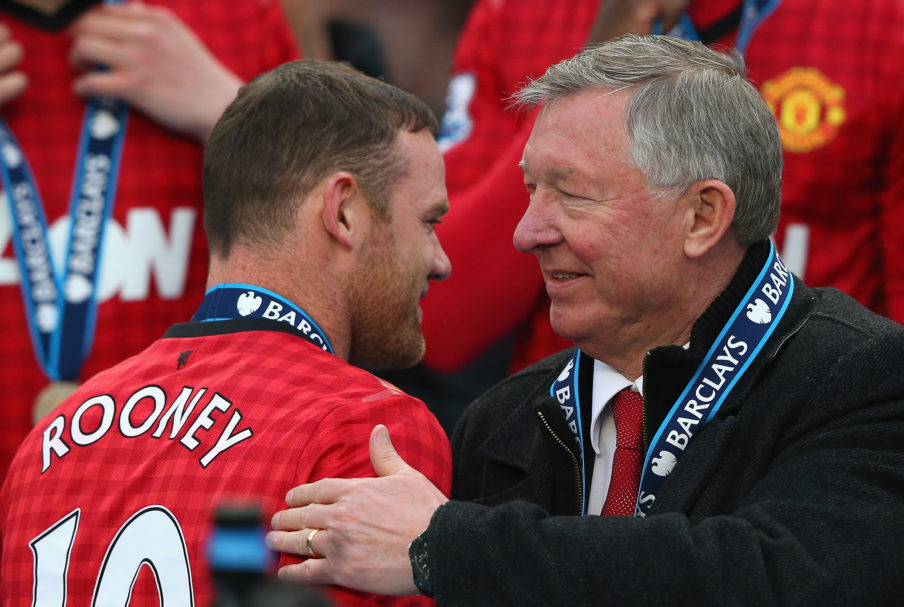
Supporters have every right to be aggrieved with Wayne Rooney wanting to leave the club, twice, but surely it is worth offering some sort of forgiveness? Though his desire to leave in the past will always, and justifiably so, affect the way some fans see his legacy, it is also worth remembering that it is now in the past. Rooney is still at the club and is committed to the cause.
He was young, naive and received poor advice from those who hold influence over him (his agent for example). He made a mistake but who doesn’t commit those? You can argue that his statistics aren’t impressive enough to match a player with his reputation (and salary) and that Rooney has failed to fulfil his undoubted potential. In his twelve seasons at United, only four times has he scored 20 goals or more. Yet, as this article has already touched upon, Rooney hasn’t always been an out-and-out goalscorer and has been willing to put the team before himself. His lowest tally came in 2014/15 when he managed 14 goals. In every other campaign he has managed to score more, and his game has always been more than just goals scored.
Rooney has been an all-action, energetic and passionate player who the fans can easily relate to. Perhaps his finest quality, is that he has always been a player that you can trust. The manager, his teammates, the fans can rely on him to provide match-winning magic or to drive the team forward. It is fair to say that he is no longer the player he once was, something that can be attributed to his positioning dilemma, and even though he hasn’t always been the main man at the club, he has always been there and you can be sure that the likes of Ronaldo and van Persie wouldn’t have scored half as many goals if Rooney didn’t provide the platform for them to do so.
Wayne Rooney will probably always be a player that divides opinion amongst Manchester United supporters, and he will probably have to deal with being a scapegoat when things go wrong. Fortunately, he has the shoulders to carry such a burden.


Comments.
Loading comments…