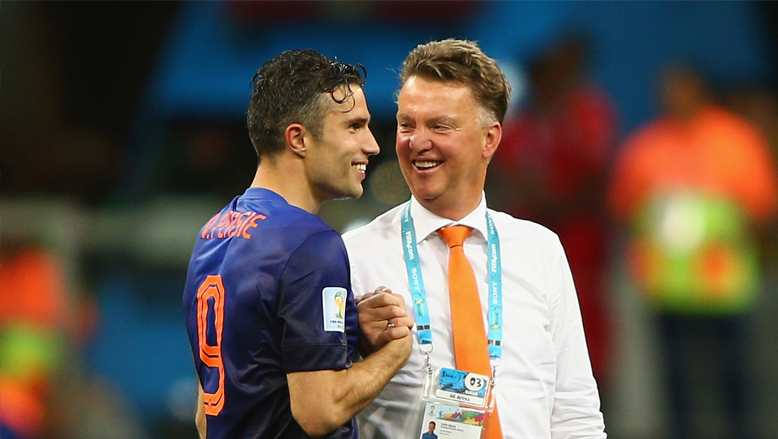
With the signing of Memphis Depay from PSV Eindhoven announced last week, it provided the perfect opportunity to look back on the Dutch connection at Old Trafford and the influence it has had on the Manchester United story.
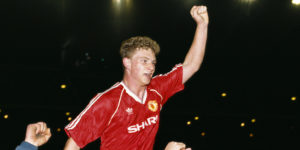
Arnold Muhren was the first Dutchman to appear in United colours. He was signed by Ron Atkinson in 1982, joining from Ipswich Town. He was something of a rarity in English football at the time. Not many foreign imports had made it across to Britain and Muhren was one of the first.
Even though he was in the twilight of his career when he arrived at Old Trafford, he still displayed that class which set Dutch players apart, particularly in the 1980s. He had been a part of the famous Ajax team of the 1970s, winning a European Cup in 1973. He enjoyed further European success at Ipswich, where he won the 1981 UEFA Cup, and added a European Cup Winners’ Cup in 1987 during his second spell in Amsterdam.
At United, he didn’t enjoy quite as much success but managed to win the 1983 FA Cup, scoring a penalty in the 4-0 replay win over Brighton & Hove Albion. Muhren left United after failing to make the 1985 FA Cup final squad but continued his career back in Holland. At the age of 37, he achieved the highlight of his playing career, being part of the Holland side that won the 1988 European Championships. It was his cross which Marco van Basten famously volleyed home in the final.
It wasn’t until 1996 that two more Dutchman arrived at United. Jordi Cruyff signed from Barcelona in a £1.4 million deal. He spent four years at Old Trafford but never really established himself as regular member of the first team. Perhaps hampered by the comparisons with his famous father (he wore ‘Jordi’ on the back of his shirt rather than ‘Cruyff’) his appearances were sporadic and his United career never took off. Despite scoring a couple of vital goals during the 1998/99 season, he missed the culmination of the Treble having joined Celta Vigo on loan.
The other Dutchman to join in the summer of 1996 proved to be a more successful acquisition. Raimond van der Gouw spent six seasons at Old Trafford, proving to be a solid and reliable understudy for Peter Schmeichel and his various successors. He signed from Vitesse Arnhem where he had spent the majority of career. Van der Gouw’s experience was valued highly by Ferguson who felt he was ideal for the big European occasions. Particularly after Schmeichel departed and amidst all the troubles suffered by the Great Dane’s successors, van der Gouw was always there to be relied upon and he rarely disappointed.
In the summer of 1998, as Alex Ferguson was putting together the finishing touches to squad he felt worthy of challenging for club football’s biggest prizes, the signing of Jaap Stam proved to be one of his most important. The giant defender signed from PSV Eindhoven for £10.9 million, a world record fee for a defender. After a shaky start he proved himself to be worth every penny. He was a giant in every sense of the word. Have Manchester United had a defender of such presence and power? Stam formed a good partnership with Ronny Johnsen as the Treble was achieved in his first campaign. His importance to the team can be demonstrated in the fact that he won the league title in all three of his full seasons at the club. His controversial departure to Lazio in 2001 was later described by Ferguson as ‘a mistake’.
By the time Stam had departed for Italy, fellow countryman Ruud van Nistelrooy was already making himself a hero at Old Trafford. Having joined that summer for £19 million (also from PSV), a British record, he had started paying back the fee in goals. He could have signed a year earlier but a knee injury curtailed it and ruled him out for a season. If there was any doubt about his ability to return to fitness then it was soon forgotten. Van Nistelrooy scored an incredible 150 goals in just 219 games for United with a strike rate only bettered by Tommy Taylor. No player has scored as many European goals in a United shirt. It is a pity that his trophy haul isn’t as impressive as his goals tally. A Premier League title and a League Cup winners’ medal is scant reward for such a wonderful player.
Sir Alex Ferguson’s difficulties in replacing Peter Schmeichel were well documented and arguably it took six years to finally get it right. The man who was proven to be the worthy successor was Edwin van der Sar. He was on United’s radar when Schmeichel moved on but eventually joined Italian giants Juventus from Ajax. After such a glorious spell in Holland where he won the 1995 Champions League (under Louis van Gaal), his time in Serie A was disappointing. His move to newly-promoted Fulham caught many by surprise and he made his debut at Old Trafford, being on the losing side thanks to his compatriot Ruud van Nistelrooy, who scored twice in a 3-2 win. It wasn’t until 2005 that Sir Alex Ferguson finally signed van der Sar and it was an inspiring purchase. His defining moment in a distinguished United career came in Moscow. His penalty heroics and match-winning save from Nicolas Anelka ensured a third European triumph for United, in the 50th anniversary year of Munich. Unfortunately he couldn’t replicate the achievement in his final professional match as Barcelona put three past him in the 2011 Champions League final at Wembley.
As a result of losing the 2012 Premier League title to Manchester City by the slim margin of goal difference, Sir Alex made a top striker his main transfer priority. What the fans didn’t expect was the sensational capture of Arsenal’s Robin van Persie. The £24 million signing made the difference as United secured a record 20th league title in Sir Alex Ferguson’s final campaign in charge. Fittingly wearing the number 20 shirt, van Persie was magnificent in firing his team to the trophy. Winning goals at Anfield and the Etihad endeared him to supporters and he also found the net in crunch matches against Arsenal and Chelsea. His finest moment, and one which live long in the memory, was the remarkable volley against Aston Villa which effectively secured the title. Van Persie has all the attributes and technique which Dutch players are famed for and although injuries have restricted his impact in the previous two years, his contribution to the Manchester United cause won’t be forgotten.
In the same summer that van Persie arrived, Alexander Buttner was brought in to provide cover for Patrice Evra. Although he never ousted the French full-back, Buttner impressed on his debut, scoring one and setting up another in a 4-0 home victory over Wigan Athletic. Under Ferguson’s successor, he made infrequent appearances and left for Dynamo Moscow shortly after Louis van Gaal was appointed.
The most recent Dutch representative is Daley Blind. Like the incoming Memphis Depay, Blind arrived at Old Trafford as the reigning Dutch Player of the Year. His consistency and versatility have been evident this season and he scored a couple of crucial goals in away draws at West Bromwich Albion and West Ham United. After coming to the attention to those who don’t closely follow Dutch football with his raking pass which set up Robin van Persie’s incredible header in the World Cup win over Spain, the £14 million transfer secured on deadline day seems like a wise piece of business.
There is of course a heavy Dutch presence on the staff. Louis van Gaal arrived with the task of returning Manchester United to European competition and it looks likely that he will achieve it. A hugely experienced manager with Ajax, Barcelona and Bayern Munich on his CV, he joined United after leading Holland to third place at the World Cup.
Van Gaal brought with him a trusted group of backroom staff. Goalkeeping coach Frans Hoek is credited with the emergence of Edwin van der Sar and has been working alongside van Gaal for 20 years. Albert Stuivenberg has only known the manager for one year but was rewarded for his excellent work with the Dutch Under 21 squad and scouting for the first team during the World Cup with the role of assistant coach at United. Marcel Bout, who has worked with the manager since their AZ Alkmaar days, will be in charge of scouting the opposition. Jos van Dijk will be writing the training programmes for the first team and Max Reckers is in charge of performance analysis and the man tasked with handling the enormous amount of data that is processed at a club like Manchester United.
Memphis Depay will be the tenth Dutchman to play for Manchester United, and he will be hoping to add his own chapter to the Dutch connection at the club.
Comments.
Loading comments…