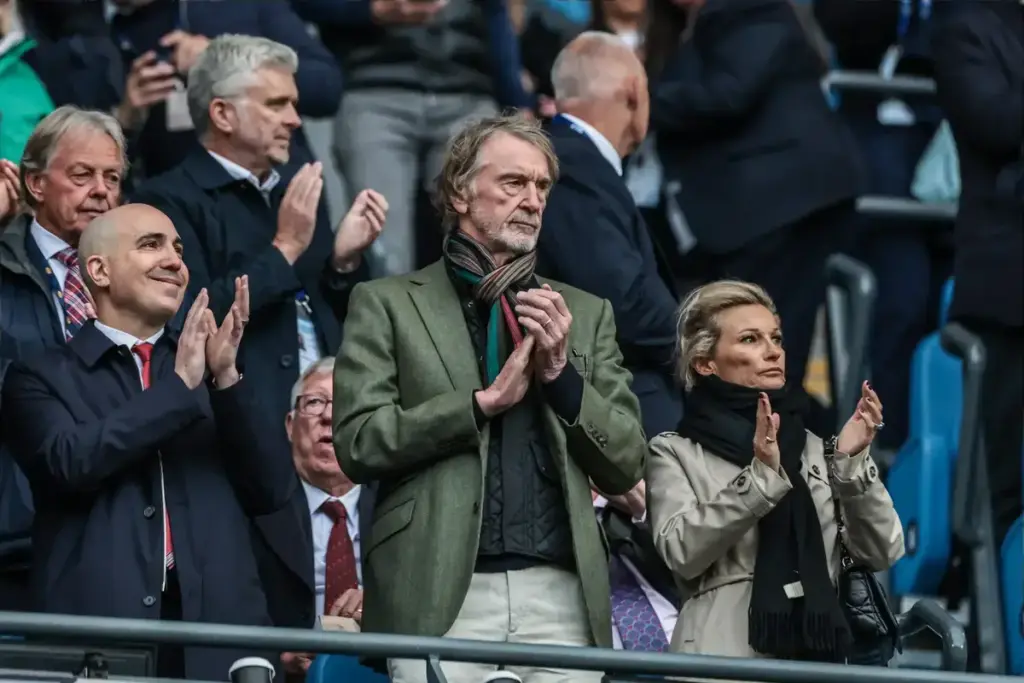

Manchester United have spent £155 million on first-team players this season under INEOS, a figure that sits at the centre of a much bigger conversation at Old Trafford.
Chief executive Omar Berrada has publicly set a target of winning the Premier League title by 2028, and that ambition now has to be measured against what the club is actually putting into the transfer market.
The Scale of INEOS’s Ambition at Old Trafford
Berrada’s 2028 target is not a throwaway line. It is a public statement of intent from the man overseeing football operations under INEOS’s ownership structure, and it sets a timeframe against which every transfer window, every appointment and every result will be judged. Supporters have heard grand plans before, but attaching a specific year to a specific trophy raises the stakes considerably. Although a slow start to this season doesn’t suggest anything close to a future title challenge.
That is why the £155 million outlay this season matters so much. It represents United’s most visible statement of ambition since INEOS took control of football matters, and it is the figure fans will point to whenever progress towards 2028 is discussed. Joshua Zirkzee’s arrival is a useful reference point here. He joined United from Bologna three years ago in a £36 million transfer, a deal that at the time was framed as smart, value-driven recruitment rather than a marquee statement signing. The scale of ambition has clearly shifted since then, but the underlying question remains the same: is the spending sufficient to close the gap to the league’s genuine title contenders? United’s own squad has already sent a message on that front, as covered in our transfer warning to INEOS following a chastening pre-season display.
Comparing Transfer Investment Across Premier League Rivals
Context is everything when assessing £155 million, and the rest of the Premier League’s top clubs provide plenty of it. Manchester City started two midfielders signed for £116 million and £125 million respectively in a recent derby, and still had an £85 million midfielder available on the bench. That is a level of squad depth built through spending that dwarfs anything Manchester United have committed this season, and it illustrates just how far the financial gap to the reigning benchmark of English football still stretches.
Tottenham offer a different but equally instructive comparison. After a17th-place finish in the Premier League, Spurs signed three players for more than £85 million each. That is a club using serious financial firepower not to build on success, but to try to climb out of a genuine relegation scare. It shows that £85 million-plus fees are becoming a standard entry point for clubs simply trying to stabilise, let alone challenge for the title.
Set against that backdrop, United’s £155 million spread across an entire squad rebuild looks considerably more modest than the headline figure might first suggest, a point explored in detail in the original Manchester Evening News report on INEOS’s spending patterns. Manchester United have largely improved the midfield options this season but a large squad rebuild still remains a priority.
Weighing Up the Numbers Behind Berrada’s 2028 Plan
Put simply, United’s total outlay this season is roughly comparable to the combined cost of the two midfielders City started in their derby, before even accounting for the £85 million player left on the bench. That comparison alone should temper expectations about how quickly spending gaps can close. Manchester City did not build their dominance overnight, and their squad depth now allows genuine title-calibre players to sit outside the starting eleven, a luxury United are nowhere near replicating.
Tottenham’s example cuts the other way but reinforces the same point. Spending heavily is no longer a guarantee of success, nor is it exclusively the preserve of clubs already challenging at the top. It has become the baseline cost of competing seriously in the Premier League at all, whether that competition is for the title or against relegation.
For Berrada’s 2028 target to be credible, United’s spending will need to scale up significantly and, crucially, be sustained across multiple windows rather than delivered in a single transformative summer. One strong season of outlay does not undo years of underinvestment relative to City’s model, nor does it automatically translate into the kind of squad depth that allows a club to leave an £85 million player unused.
None of this means the 2028 target is unrealistic on its face, but it does mean the gap being described in public statements has to be matched by genuinely comparable financial commitment over time. The numbers so far represent a step, not a leap.
What Michael Carrick and United Must Deliver Next
Responsibility for turning that investment into results ultimately falls on manager Michael Carrick and his coaching staff, who must extract maximum value from the squad assembled so far. There is no room here to speculate on Carrick’s future or his contract situation, but the football reality is straightforward: the players signed this season, Zirkzee included after missing out on a loan move, need to justify their fees on the pitch if the spending is to be seen as progress rather than simply activity. How the club supports him in that process has already drawn scrutiny, including in our earlier look at the INEOS treatment of Michael Carrick.
The broader challenge for INEOS is one of consistency. Manchester City’s dominance was built on years of sustained heavy investment that eventually produced the kind of squad depth capable of benching an £85 million midfielder and challenging for the top titles every season.
Tottenham’s recent business shows that even clubs fighting relegation are now spending at similar levels just to survive. United’s £155 million this season is a meaningful step, but it will need to be followed by further significant investment, smart recruitment and tangible improvement on the pitch under Carrick if Berrada’s 2028 target is to move from aspiration to genuine possibility.
For now, the numbers suggest United are competing in a market where £85 million fees are increasingly ordinary, not exceptional. Closing that gap by 2028 will require more than one ambitious summer of spending.

Comments.
Loading comments…