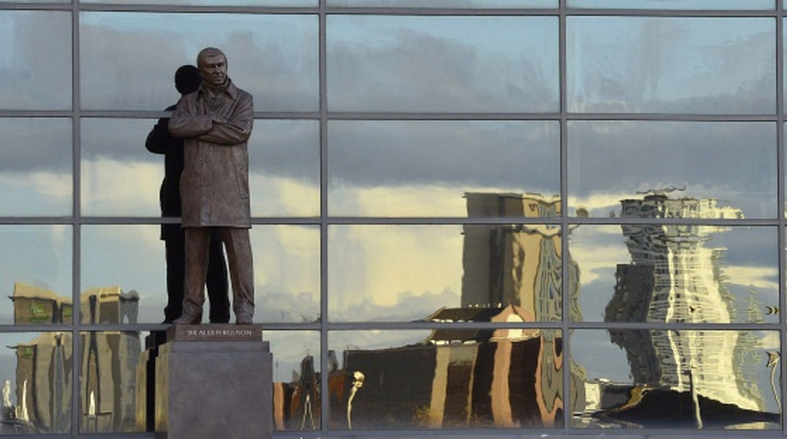
Manchester United have had only nineteen full time managers since A. H. Albut took on the role of secretary in 1892. He was followed by James West, Ernest Mangnall and John Bentley before Jack Robson became the club’s first ‘manager’ when he was appointed in December 1914.
Following Robson’s departure in October 1921, United went through a spell of constant change, the managerial hotseat wasn’t kept occupied long with five different occupants filling the role until the end of the Second World War.
Amazingly, the club have had just nine managers since 1945, which is even more incredible when you consider that local rivals City have had fourteen different managers since the start of the Premier League in 1992. Although the rather rash dismissal of David Moyes showed that United wouldn’t shy away from removing managers, the club still retains a reputation for displaying patience when it comes to the man in charge. Here we pick the top five managers to have led Manchester United.
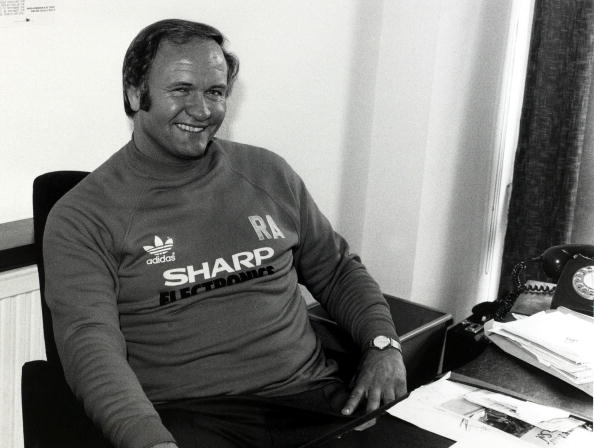
5 Ron Atkinson (June 1981- November 1986)
Although ‘Big Ron’ failed to deliver the league title Manchester United so desperately craved in the 1980s, the charismatic manager ensured that the trophy cabinet was kept well stocked and the club’s proud FA Cup tradition continued.
Following the relatively unsuccessful spell of Dave Sexton, United appointed a man of complete contrast to his predecessor. Whereas Sexton was a quiet unassuming man, Atkinson was a bold and outwardly confident character.
His sides played attractive, expansive football and despite lacking the consistency to maintain a title challenge, they entertained supporters and produced some memorable moments. His time in charge will no doubt be tinged with regret for failing to secure a league title, in the 1985/86 season they won their opening 10 matches before tailing off massively and finishing fourth, but Big Ron led the club to two FA Cup triumphs and brought back European football to Old Trafford.
Under his management, Big Ron brought to the first team fold some of the club’s finest ever players. He gave a debut to Norman Whiteside in 1982 and watched on as the young forward scored one of the all-time FA Cup final goals in 1985. Atkinson also gave a first team chance to Mark Hughes and was duly rewarded with goals. Hughes also represents the financial difficulties Atkinson faced from Europe’s biggest clubs in the 1980s. His hand was forced in the sales of Hughes to Barcelona and Ray Wilkins to AC Milan, perhaps explaining the difficulty in building a side able to win the coveted league trophy.
The best signing Atkinson ever made was from his previous club West Bromwich Albion in 1981. United parted with an English record £1.5 million fee for Bryan Robson and the midfielder became the most industrious and talented all-round player in the country for over a decade. His powers were never more evidenced than on his, and Atkinson’s, finest night. In a classic European tie under the Old Trafford floodlights in March 1984, a Barcelona side containing a certain Diego Maradona, were blown away by a magnificent United performance. At the heart of the 3-0 win was Robson who scored twice as Atkinson’s side overturned a 2-0 deficit from the first leg and proved that Manchester United were able to cut it with Europe’s finest once more.
Big Ron’s achievements might have, understandably, been overshadowed by the unimaginable glory that followed under his predecessor, but his teams always played attacking football and several of his signings went on to form the cornerstone of future successes.
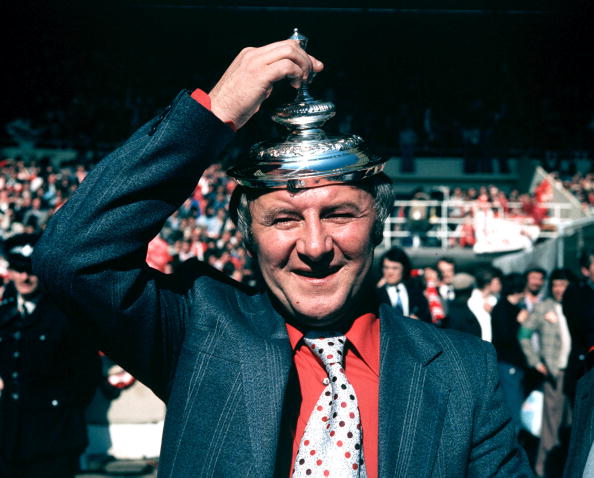
4 Tommy Docherty (December 1972- July 1977)
Not many managers could oversee the relegation of a club the size of Manchester United, just six years after their European triumph at Wembley, and make it into the top five of that club’s greatest ever bosses.
Tommy ‘The Doc’ Docherty did exactly that and whilst it is true that he was unable to prevent the relegation to the second division in 1974, it is what he did from that point which has ensured him a place in United folklore. In fairness he had taken over a side sliding into a slow and painful decline. The team, which had two years previously conquered Europe, still contained the legendary talents of the fabled ‘trinity’ but was shorn of a direction and was wandering the footballing wilderness.
In hindsight, relegation to the second tier was actually a blessing in disguise for both the club and Tommy Docherty. It gave the manager the opportunity to start over and rebuild the side lingering in the shadow of former glories. The team that the Doc built was in the tradition of Busby’s brilliant sides of the forties, fifties and sixties but it now had its own identity. It played the same attractive, cavalier and attacking football but with new stars capable of filling the boots worn by Best, Law and Charlton.
Docherty’s team of the seventies is one of the best loved in Manchester United’s history. Considering the contenders for such an accolade it speaks volumes for the joy the Doc’s team brought to the terraces. Heroes such as Stuart Pearson, Gordon Hill and Steve Coppell were made in that side.
Although his trophy-haul is the least impressive of the top five, the true brilliance of the Doc’s reign is in what it represented. For the first time since Sir Matt Busby retired, Manchester United had a team worthy of the name. It wouldn’t be going too far to suggest that Tommy Docherty rebuilt the club and planted the seeds for future successes of Ron Atkinson and in particular Sir Alex Ferguson.
Of course he’ll be remembered for his only major honour, the 1977 FA Cup where treble-chasing Liverpool were beaten 2-1, and the unfortunate aftermath which saw him lose his job. The affair which unceremoniously ended his time in Manchester dominated the headlines but it shouldn’t overshadow what a wonderful period of entertainment The Doc’s sides treated the supporters to.
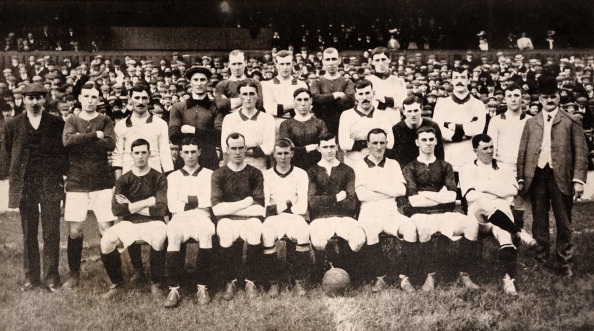
3 Ernest Mangnall (October 1903- September 1912)
Only three men have won the league title with Manchester United, a statistic which is even more impressive considering that the club have won it twenty times. Ernest Mangnall is one of the least known of United’s successful managers but he is certainly worthy of a place on this list.
It has been over 100 years since Mangnall patrolled, if you can call it that in those days, the Old Trafford touchline. Whilst there is no one around who remembers his career in Manchester, time cannot diminish history. Ernest Mangnall was the first great manager in the club’s history and he ensured a place in the record books with the spectacular success that he achieved.
Sir Matt Busby is right remembered as the founding father of the modern Manchester United but there is a reason to believe that Ernest Mangnall is the first great contributor to the name, giving United its first taste of glory. The hallmarks by which the club are known, that Busby and Ferguson championed better than anyone else, were displayed by the side of Ernest Mangnall.
Because of him, Manchester United have a glorious tradition dating back to 1908 when he led the club to its first ever league title. A Charity Shield victory followed in the same year, United were the first ever winners, before success in the FA Cup (in 1909) and a further league title in 1911 capped a glorious period in the club’s, at that point, fledgling history.
Mangnall brought the likes of Sandy Turnbull, Charlie Roberts and Billy Meredith to the club and created a team that supporters from all over the country flocked to see. He is also played a huge role in United’s moving to a new stadium in 1910. Ernest Mangnall won’t be the first name that comes to mind when thinking of legendary managers but he has played a monumental role in the history of Manchester United.
2 Sir Matt Busby (October 1945- June 1969/December 1970- June 1971)
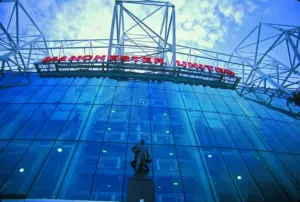
Sir Matt brought the name ‘Manchester United’ to the world through both glory and adversity. The founding father of the modern incarnation of the club, his statue is stood, fittingly, looking out from his empire.
He had to deal with adversity from the moment he arrived at the club. United didn’t even have a permanent residence, one that was inhabitable anyway, for a start. Busby soon set about instilling his ideals and beliefs of how a football club should operate. He was the first manager to have a hand in the running of the club, thinking beyond the parameters of what happened on the training pitch and on the playing field.
Alongside his trusted lieutenant Jimmy Murphy, Busby was able to build team after team in his own image. Busby saw the future of English football, his faith in youth and bringing through your own and of building a club based on solid principles, creating a family, made him light-years ahead of his time.
Busby’s Babes thrilled the nation with their exciting and breath-taking football and had the ability to turn that style into trophies. Perhaps it could be argued that it was in European football that Busby left his most significant legacy.
He also faced his, and the club’s, greatest adversity and gravest tragedy. Busby’s determination to enter his young charges into the new European club competition in the fifties was another example of his pioneering of the game. Despite considerable pressure to abstain from entering by the FA, Busby saw the future once more and it doesn’t take hindsight to see how right he was and short-sighted the authorities were.
It was in Europe that Busby and Manchester United suffered a tragedy not expected to happen to people who just played football. It was in this tragedy, and the remarkable fight to survive, that Manchester United truly emerged as more than a football club. The club was left shattered by the losses of players and staff and Busby himself had to fight for his life before he could even contemplate facing the tragedy which had unfolded on that snow-covered runway in Munich.
The fact that Busby would lift aloft the European Cup just ten years on from that fateful day in February 1958 is a testament to the man and the symbol of the spirit which makes Manchester United so unique and the biggest football club in the world.
Whilst the painful memories and feeling of guilt would live with him until he passed away, the night of winning the European Cup in 1968 at least gave him a sense of redemption, that the journey he had started the club on and which had endured such agonising losses along the way, was finally brought to an emotional end.
As Busby famously once said, “at Manchester United we strive for perfection and if we fail we might just have to settle for excellence”. The pressure and expectation for United to be not only successful, but the most successful club in the game is because of what Sir Matt Busby started, the legacy that he created. We wouldn’t want it any other way.
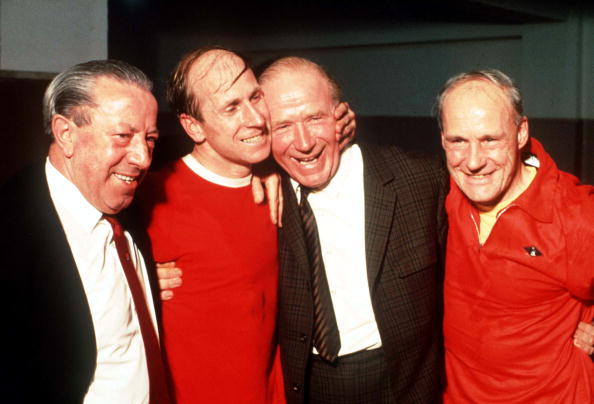
1 Sir Alex Ferguson (November 1986- May 2013)
The immense and gargantuan shadow of Matt Busby consumed many of his successors, the pressure to get anywhere near matching his achievements generally proved too much. That is both a tribute to the great man and the one which eventually equalled his success and set a new standard for Manchester United to aspire to.
Everyone who has the slightest interest in football will be aware of the incredible success story of Sir Alex Ferguson. The Scot didn’t fear the legacy of his compatriot but embraced it, using it as an inspiration to achieve what Manchester United expected.
Ferguson displayed all the characteristics which we saw in Busby. Even though he, fortunately, didn’t endure the tragedy which befell Busby, Ferguson had to be determined to get through the difficult times his team suffered on the pitch.
If 1968 was Busby’s finest and most memorable hour then 1999 was surely Ferguson’s. Achieving the European dream some thirty-one years on from the first, with a team made up of home-grown talent, and a display of the intangible spirit and never-say-die attitude which is in the fabric of Manchester United, it is certainly Ferguson’s greatest moment.
When he arrived at Old Trafford, Ferguson had taken over a sleeping giant but he managed to re-instil the same philosophy and principles that Busby himself had before him. Ferguson faced different challenges, the world and subsequently the game of football was different, and constantly evolving. He kept pace and beat away all competition, maintaining United’s position at the top.
Sir Alex, like Sir Matt, created a legacy so vivid and incredible that it would be inevitable that the club would struggle in his absence. If Busby founded the potential for United to become the biggest club the world, then Ferguson saw it and took it to a new level. Under him, the club became the biggest and the greatest. Sir Alex is not only the best Manchester United manager, he is the best ever in the history of the beautiful game.
Comments.
Loading comments…