As Manchester United and Manchester City prepare to face one another at Old Trafford this weekend, excitement is building amongst supporters for what is sure to be a fascinating game.
One particularly intriguing aspect of the derby will be the presence of Jose Mourinho and Pep Guardiola in opposition dugouts again, as both take charge of their first Manchester derby.
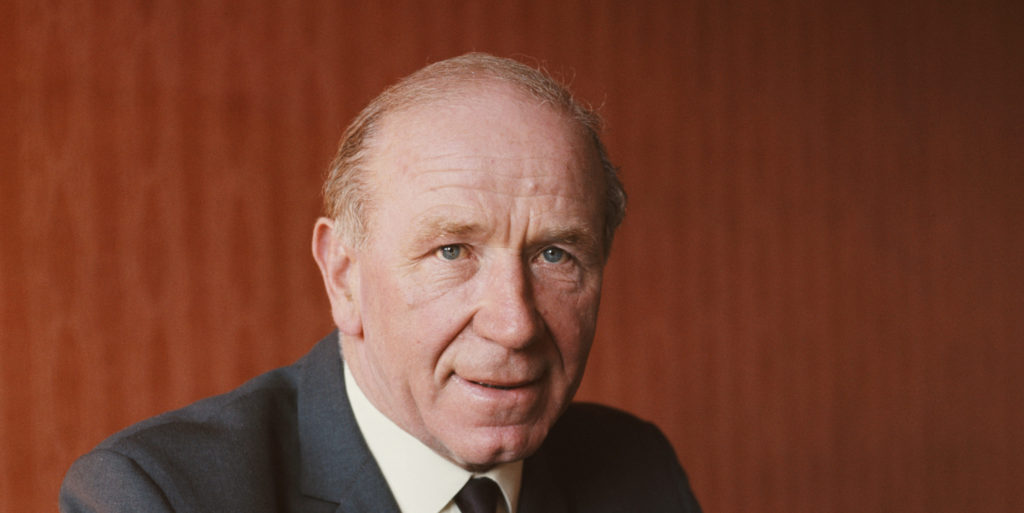
However, as both look to build a dynasty at their respective sides, neither could imagine being as successful as former United boss Sir Matt Busby.
Indeed, way before the difficult reigns of Louis van Gaal, David Moyes and the triumphant tenure of fellow Scot, Sir Alex Ferguson, it was Busby who stood in the Old Trafford dugout from 1945 until 1969 – a spell less than three years shorter than the more recent legendary reign of Ferguson.
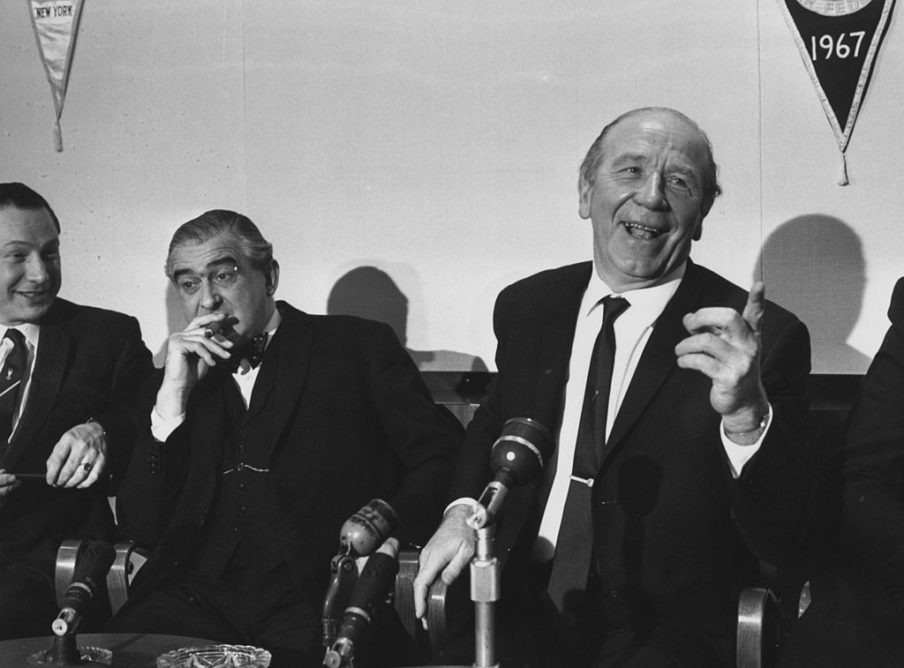
But before Busby was making history on the red side of Manchester, he spent the majority of his playing career at rivals City, and he even moved to Liverpool towards the end of his professional career.
It wasn’t quite the trophy-laden spell he would later enjoy with United, but Busby, a ‘right-half’ or ‘inside forward’ – typically more attacking roles, won the 1934 FA Cup with City. It was perhaps the highlight of his time with the Blues, for whom he appeared 229 times in eight years at Maine Road.
However, typically of the man, that success hadn’t come easily for Busby and his teammates. The Scot had been one of eight players that had also started for City in the FA Cup final in the previous year, losing 3-0 to Everton.
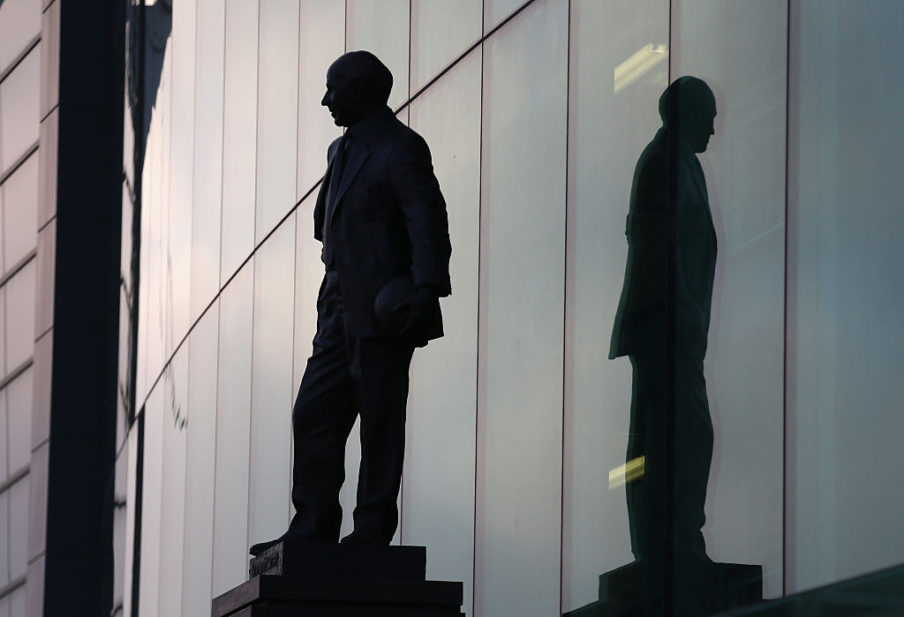
The following year, though, City came from behind to beat Portsmouth 2-1 in the final – giving Busby a taste of success and the comeback victories which would become synonymous with United.
After ending his career with Liverpool, Busby turned down the chance to become the assistant manager at Anfield, and instead took up his first managerial role with United in February 1945. Similarly to Ferguson decades later, he was directly involved in training, picked the team and decided which players would be bought and sold – a management style which was unheard of at the time.
The Scot’s methods soon brought rewards. Busby led United to second in the League and FA Cup glory at the end of his first full season in charge, and although four more runners-up finishes followed before then, his side won the League for the first time in 40 years with their 1952 success.
Busby had had the foresight before then, though, to begin to look ahead and replace ageing stars like Stan Pearson and Jack Rowley. The youth system was revolutionised as the Scot introduced players like Bill Foulkes and Duncan Edwards into the United first team and the infamous Busby Babes won successive League titles in 1956 and 1957. The Scot’s side also led the way for English clubs to compete in Europe, as Busby’s team reached the semi-finals of the 56/57 European Cup.
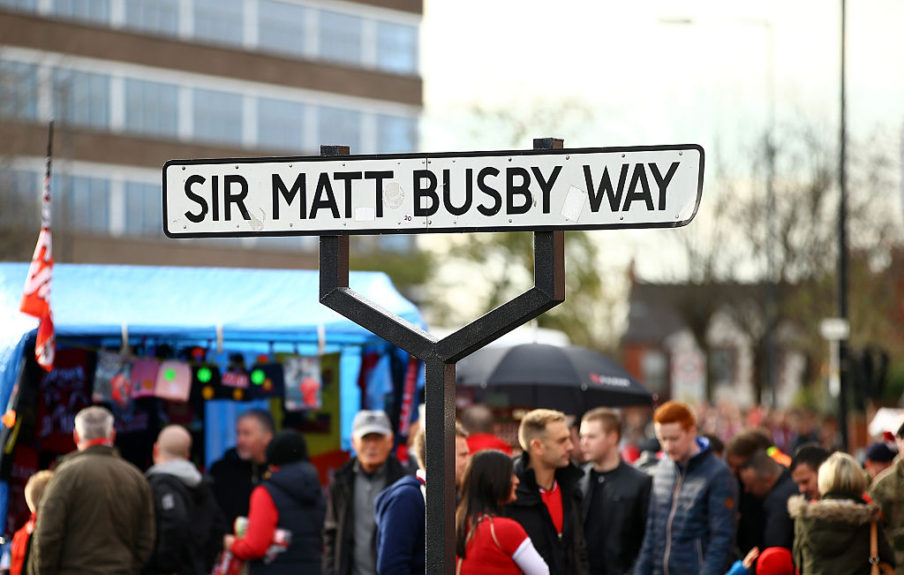
The famous youngsters also reached consecutive FA Cup finals in 1957 and 1958, but the latter of those came in the most tragic of circumstances.
The February 1958 Munich air disaster took the lives of 23 passengers, including eight United players. Others, including Busby, were seriously injured, and United players Johnny Berry and Jackie Blanchflower survived but never played again.
The disaster meant assistant manager Jimmy Murphy took over first team duties for the following nine weeks as Busby recovered. Whilst the league campaign fell away, the Reds managed to soldier on in the FA Cup and reached the final.
Busby hadn’t returned in time for the 2-0 final defeat against Bolton in May that year, but when he did resume his managerial duties, he rebuilt his side once again – a task which so many managers in the modern game find incredibly difficult.
Amongst Busby’s new recruits in the following years were George Best and Dennis Law, as they teamed up with Sir Bobby Charlton, another survivor of the crash, to form United’s ‘Holy Trinity’.
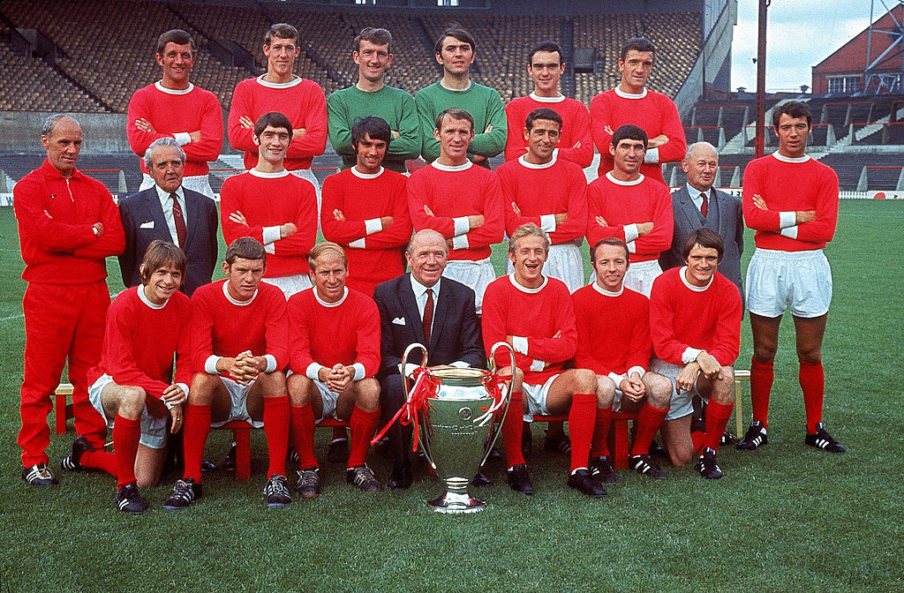
Best didn’t join until a few months after United won the 1963 FA Cup final, just five years after the tragic disaster, with Foulkes and Charlton both playing for United in that final. Successive league titles followed in 1965 and 1966 but perhaps most incredibly of all, a European Cup title would follow in 1968.
Only a decade on from the Munich air disaster, Busby had built a new, triumphant team and led them to become the best in Europe. Playing Benfica in the final, at Wembley in May 1968, Charlton (twice), Best and Brian Kidd scored as United sensationally defeated the Portuguese outfit 4-1 in extra time.
One more season would follow before his retirement, although Busby would return as United manager on a temporary basis in December 1970. In those two spells, the Scot took charge of United 1,141 times, winning on 576 occasions.
A key figure in both United and City’s histories, Busby is undoubtedly one of the most important men in Manchester’s footballing history.
Comments.
Loading comments…