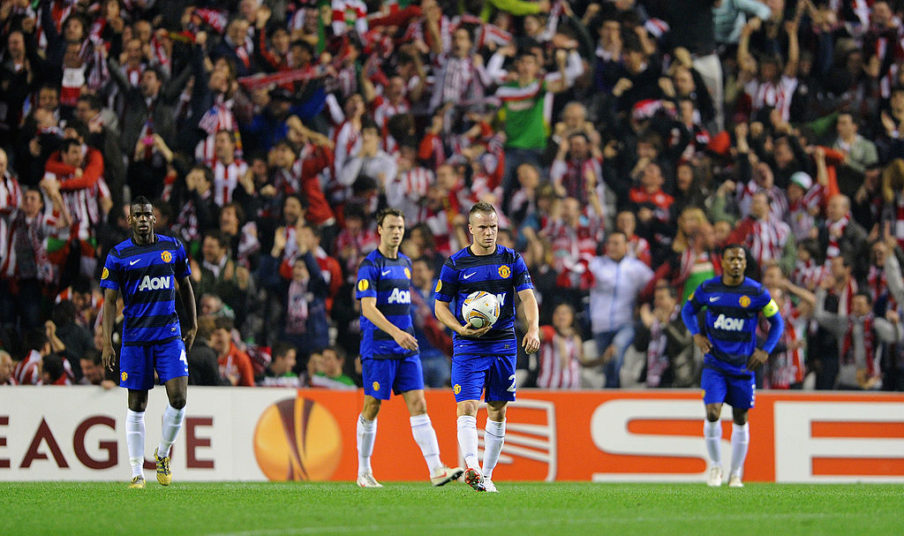
The Europa League certainly isn’t where Manchester United want to be. History and tradition dictate that we should expect to mix it with the Champions League elite. Europe’s secondary club competition has always felt below a club of United’s standing and our previous excursions in it have always been the result of our failure, inexplicably, to qualify from our Champions League group. In 2012, after finishing third in our group, Sir Alex Ferguson and his players were hardly subtle in their lack of enthusiasm for having to compete in the Europa League. It was no surprise when we were knocked out in the last 16 stage by impressive Athletic Bilbao side (containing a certain Ander Herrera). Even last season, when we appeared to take the competition more seriously following our Champions League exit, we still lost to lowly FC Midtjylland in Denmark before bowing out to Liverpool. The problems we have always faced when in the Europa League (or even its predecessor the UEFA Cup), has been a genuine lack of motivation to win it. It has been, and this was almost definitely the case in 2012, more of a hindrance than anything else.
Combined with long trips to little known places across the continent, playing against sides you’ve never heard of, the Europa League is considered all hassle and little glamour. Especially when you’ve had a taste of Champions League football. English sides have, in general, always struggled in the Europa League. Since Liverpool won the UEFA Cup in 2001, only two English sides have reached the final (Liverpool again last season, and Fulham in 2010). Teams from Spain and Portugal have dominated the competition in recent years and even Ukraine has had regular sides reach the final. The major reason for the relative lack of involvement from English clubs is the same as why Manchester United have never won the competition; not taking it seriously enough.
The ‘carrot-on-a-stick’ promise of Champions League qualification has certainly enhanced the Europa League’s importance and reputation somewhat but the likes of Sevilla, Benfica and Atletico Madrid were taking it seriously already. Despite being a competition which English sides (United included) have scoffed at, it is still a European trophy and one that can be used, most notably in the case of Atletico Madrid, as a platform for further and even bigger success (Atletico won the Europa League in 2010 and 2012 and have since won the Super Cup, La Liga and reached two Champions League finals). Manchester United could argue, particularly during the reign of Sir Alex Ferguson, that they had no need for such a platform with them already being regulars in the Champions League knockout rounds. However, in 2017 the Europa League could well be a springboard for the club, to ensure they reclaim their place amongst the European elite.
The importance with which Manchester United now hold the Europa League is symbolic of the struggles since Sir Alex Ferguson retired in 2013. The fact the club probably needs to rely on winning the competition to ensure a place in the Champions League shows how our standing at home and abroad has changed. No longer is a place in the top four of the Premier League (which was such a given under Ferguson) guaranteed for United, that the importance of winning the Europa League has become enormous. We may not want to be in the competition but it’s time to be realistic, we are in the semi-finals and close to adding another European trophy to the cabinet.
Whilst we are clear favourites to win the trophy, it will be far from easy to actually do so. When it gets to the semi-final stage there are no easy draws and I didn’t have a preference for who I wanted us to get. The three remaining sides are all competent at this level, have European experience and will fancy their chances. Ajax have a wonderful history and have given so much to the game but haven’t made an appearance in the semi-finals of any European competition since 1997. Olympique Lyonnais are, other than United, arguably the most fancied team left in the Europa League. They were regulars in the Champions League, reaching the semi-final stage three times in a row between 2004 and 2006 and again in 2010 where they knocked Real Madrid in the last 16. Boasting the talent of Alexandre Lacazette up front and the diminutive Matheiu Valbuena behind him, they are deservedly considered one of the favourites.
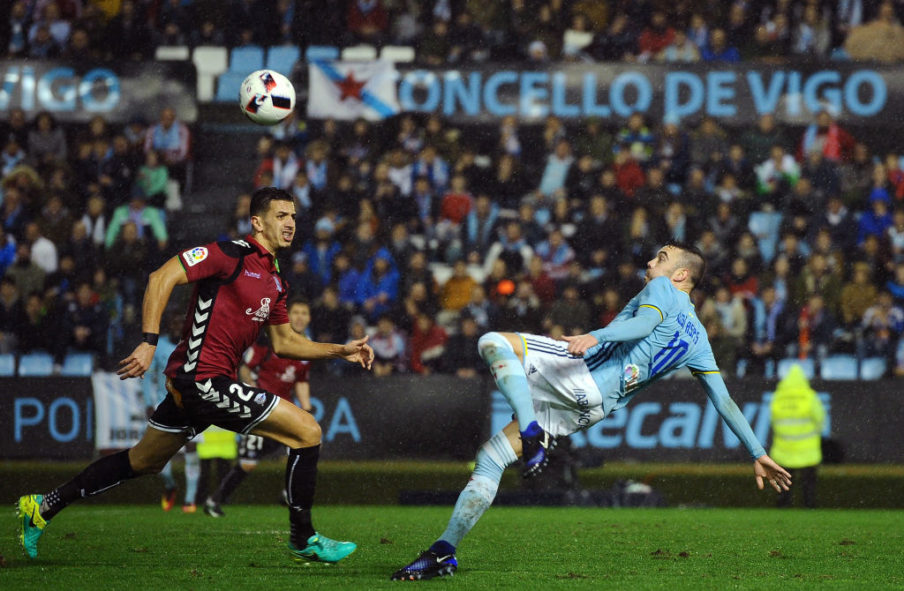
United’s semi-final opponents, Celta Vigo, are the least illustrious of the remaining sides having never won a major domestic trophy and only ever sporadically competing in Europe. Playing in their first semi-final appearance, on paper they are probably the ‘easiest’ draw for United. Of course, matches are played on the pitch and not on paper. We would be kidding ourselves to believe that we will find our tie with Celta straightforward. Whilst their league form has been patchy, they sit 10th in La Liga, they can include both Barcelona and Real Madrid as scalps this season. In Iago Aspas, they have a clever forward who was rewarded with his Celta form (16 goals this campaign) with a place in the Spanish national side. Forget the marginal figure who never settled at Liverpool, Aspas could prove a real handful for United’s defence.
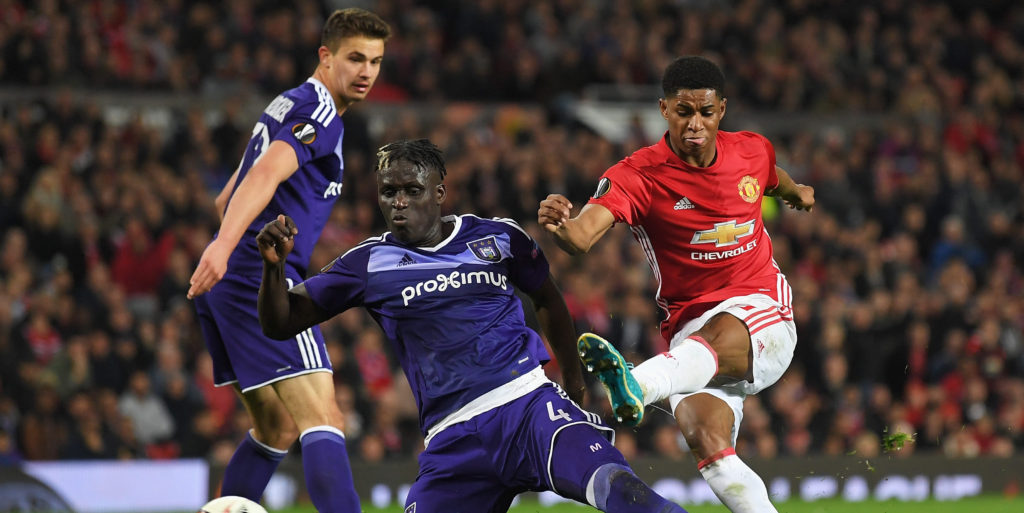
If we are to win this season’s Europa League, United will need to find a solution to a common problem this season; being clinical in front of goal. We have at times played our best football, and scored plenty of goals, in the Europa League but we have also looked pedestrian and complacent. The team has removed any doubts that caused lacklustre displays away to Feyenoord and Fenerbahce in the group stages and seem fully motivated and determined to win this trophy. The tie with Anderlecht both frustrated and inspired. In all honesty, it should have been over in Belgium and our relative complacency and failure to kill of the game allowed Anderlecht back into it. That frustration was almost overwhelming at Old Trafford, as at least five golden opportunities to score were spurned. It could have been one of those nights but young Marcus Rashord, in the very competition where he announced his prodigious talent last year, delivered a moment of individual brilliance to put United through. We will need to be better in the next round but there is a real spirit and determination to Mourinho’s side, shown with this impressive unbeaten run of form, that gives the supporters the belief that we can win the Europa League.
The trophy is moving onto the horizon, just three matches now separate us from it. Not only would winning it be our route to the Champions League but that success could be the platform for the future, lay the groundwork for Jose Mourinho’s United. Atletico Madrid have used it and even our manager has, following up his 2003 UEFA Cup victory at Porto with the Champions League title the following year. The Europa League isn’t where Manchester United want to be, but let’s go and win it and another trophy to the cabinet. Who knows where that success could take us.

Comments.
Loading comments…