
- Man Utd’s historic win over Anderlecht
- It’s significance in Red Devils’ history
- The Busby era
The 1956/57 season was a hugely significant campaign in Man Utd‘s history. It was the confirmation of the Busby Babes’ dominance and mastery of the English game as they secured a second consecutive title and reached the FA Cup final.
They also entered European competition for the first time, becoming the first English side to compete in the fledgling European Cup, despite the reservations of the FA. The governing body of English football may have been short-sighted in its views on how the game was developing but in Europe Matt Busby saw a bright future.
In fact, he saw the future. Manchester United would become the forerunners of European football and the Babes dazzled crowds across the continent with a brand of football for which the club is now famous. The history of the club is intertwined with Europe and the 1956/57 campaign was to be the last full season that the world would see the Babes.
If 1957/58 would end in tragedy and the history of Manchester United changed forever, in 1956, Europe opened up new and bright horizons and Matt Busby and his Babes would blaze a new trail that carried their names across the world. In September 1956, the Red Devils embarked on their exciting new adventure. Could they match the best that Europe had to offer?
Man Utd’s thrashing of Anderlecht
Their first challenge lie in the Belgian champions Anderlecht. In a time before extensive scouting programs, little was known about opponents from unexplored lands. United would have to rely on their own astounding ability and talent to overcome whatever Europe threw at them.
The first leg of the preliminary round took place in Brussels on 12th September 1956. Goals from Dennis Viollet and Tommy Taylor ensured United took back a 2-0 lead to Manchester. Ahead of the second leg, the first European Cup match to be played on English soil, United were cautiously optimistic about their chances of progressing to the next round. The match was to take place at Maine Road, the home of Manchester City, as Old Trafford didn’t have any floodlights.
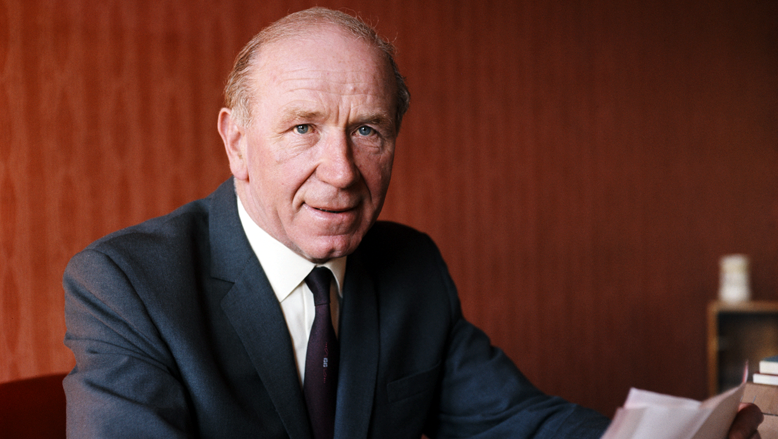
According to Matt Busby, the fact his team weren’t playing at their usual home, would make for a difficult task in the second leg. “We were all keyed up for the return match and also a little anxious because we too were playing away from home”, he said, “We had to stage the tie at Maine Road because Old Trafford did not then have floodlighting. The conditions were also a little unsettling. It had rained heavily and the pitch was covered in pools of water. We needn’t have worried though”.
On the night of 29th September 1956, any worries Busby or his players had prior to the match were blown away, much like their opponents, in a magnificent first half display. Tommy Taylor had opened the scoring after just 8 minutes before adding a second on the 20th minute. Dennis Viollet then fired in a 19 minute hat-trick to give United a 5-0 half time lead.
Terrific Taylor
Most teams might, understandably so, ease off in the second period when commanding such a lead and grip on the match. But the Busby Babes were not most teams. When Tommy Taylor completed his own hat-trick after 52 minutes, any hopes Anderlecht had had of an easier ride in the second half promptly faded. Liam ‘Billy’ Whelan scored twice more, either side of goals from Dennis Viollet – his fourth – and Johnny Berry. A special mention should go to David Pegg, the young winger, who ran the Anderlecht defence ragged and had a hand in nearly all of United’s ten goals.
A remarkable European night
10-0 is a remarkable result at any level, at the very top it is a quite unthinkable one. The significance of the Babes result is beyond the confines of the final score. It was the beginning of a long, tragic and ultimately glorious association with European football for Manchester United. The Babes were the pioneers of taking English football onto the continent and bringing the game into a new and exciting era. They were the darlings of the English game, and now they would thrill audiences across Europe.
As Sir Matt Busby aptly put their performance on that wet night in Manchester, “it was… the finest exhibition of teamwork I had ever seen from any side either at club or international level.” Busby’s Babes had embarked upon a journey that would shape the future of Manchester United.
United XI: Ray Wood, Mark Jones, Bill Foulkes, Roger Byrne, Liam Whelan, Duncan Edwards, Eddie Colman, Dennis Viollet, Tommy Taylor, David Pegg, Johnny Berry.
Comments.
Loading comments…