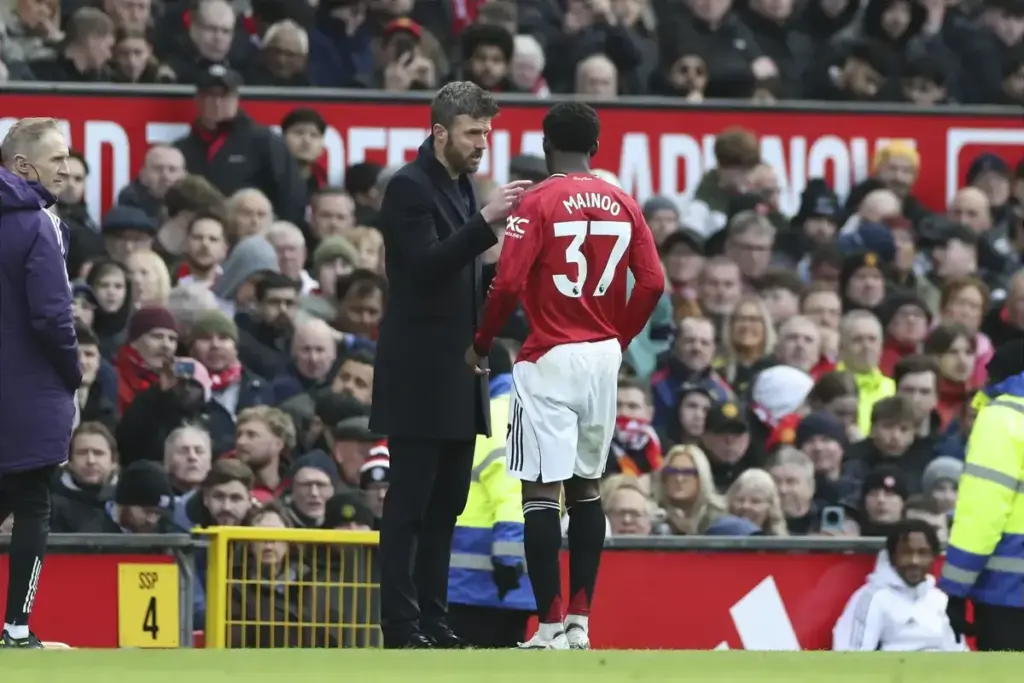

Manchester United’s Carabao Cup campaign ended on Wednesday 16 September 2026, as Brighton & Hove Albion fought back from two goals down to win 3-2 at Old Trafford.
Manchester United flew out of the blocks, with Shea Lacey and Mason Mount both scoring inside the opening ten minutes to hand Carrick’s team a dream start. Brighton refused to fold, and goals from Charalampos Kostoulas, Pascal Groß and substitute Maxim De Cuyper turned the tie on its head before the final whistle.
This breakdown examines how United lost control of a game they had dominated early on, and why Brighton’s response proved so effective across the remaining eighty minutes.
How Brighton Reversed the Early Deficit
United’s fast start was built on shot quality rather than sustained control, since Lacey and Mount both finished from clear chances inside the box. Chances of that kind carry real weight in any expected-goals model, and they explain why United’s early lead looked so commanding after only ten minutes.
That lead did not last, as Brighton’s field tilt, the share of play spent in the attacking third, swung firmly in their favour once the half wore on. United dropped deeper instead of continuing to press high up the pitch, allowing Brighton’s midfield to dictate rhythm through central progression rather than direct balls forward. United’s passes-per-defensive-action figure would have loosened as this happened, the statistical language of a team inviting pressure rather than hunting the ball back.
Brighton’s three response goals followed a similar pattern, since Kostoulas, Groß and substitute De Cuyper all scored from patient build-up play rather than quick transitions. Shot quality drifted steadily from United’s account toward Brighton’s as the match wore on, and by full time the flow of the game had swung well past United’s early spike. The final score reflected that shift more fairly than the opening ten minutes ever suggested it would.
Second Half Belonged to Brighton
Big chances created, one of the more reliable indicators of attacking quality, likely tells a similar story, since United’s two clearest chances of the match arrived and were converted inside the first ten minutes. Brighton, by contrast, built theirs steadily, testing Karl Darlow from good positions on repeated occasions during the second half. None of Brighton’s three goals came from a mistake in possession or a set-piece, and each stemmed instead from sustained pressure that gradually pulled United’s defensive shape apart.
That is the clearest sign that Brighton’s improvement was structural rather than a simple change in fortune. Benjamin Sesko and Marcus Rashford started together as United’s central attacking pair, and both were heavily involved in the build-ups that produced the early goals. Once Brighton began controlling more of the ball, though, service to the front two dried up. United’s shot output for the remaining eighty minutes fell well short of the intensity shown inside the first ten. Supporters can find more on the pair’s evening in our discussion on Sesko and Brighton.
Lesson 1: Early Explosiveness from Lacey and Mount Outstripped Sustained Control
United’s opening exchanges were about explosiveness rather than sustained control. Shea Lacey’s eighth-minute opener came from a swift transition that caught Brighton high up the pitch, exactly the high-tempo start Carrick will have wanted from his front line. Two minutes later, Mason Mount doubled the lead, arriving late into the box to finish a move that stemmed from United’s press forcing a rushed clearance.
Carrick’s pressing triggers in the first ten minutes were clear to see, as United’s front line hunted the ball high up the pitch the moment Brighton’s back three showed hesitation. That aggression forced two rushed clearances within a matter of minutes, and United punished both.
Brighton’s initial hesitation did not last long, however, and their back three settled quickly once the early setback had passed. United’s front line found fewer opportunities to repeat the same trigger, since Brighton began building more patiently from deeper positions. That adjustment alone removed much of the disruption United had relied on to create their fast start.
Those two goals inside ten minutes marked the peak of United’s control over the match rather than becoming a platform for it. Brighton’s start had been unsettled, and Carrick’s players punished hesitancy in the visitors’ build-up with directness and pace. Once the early sting had been delivered, though, United struggled to reproduce the intensity that had created it in the first place.
The problem was less about the goals themselves and more about what followed them, since United allowed Brighton time and space to reorganise rather than using the two-goal cushion to control tempo. Brighton’s setback appeared to be temporary, while United’s players did not respond with the same conviction they had shown in the opening minutes.
By the midpoint of the first half, the initiative had already begun to shift away from Old Trafford’s early euphoria, as Brighton started to find joy playing through the final third. That work eventually produced Kostoulas’s finish, pulling the score back to 2-1 before the interval.
Lacey’s finish will draw attention given United’s push to blood academy graduates into the first team, a subject explored further in our piece on recent young talent development. His movement into the box inside the opening ten minutes showed real promise, though the collapse that followed is a reminder that composure, not just early talent, wins cup ties. This pattern, a fast start followed by a drop in control, is not unfamiliar to United supporters this season. It points to a deeper issue in how Carrick’s side manages leads once early aggression has done its job.
Lesson 2: Rest-Defence Vulnerabilities Exposed in Half-Spaces
Rest-defence describes the defensive shape a team keeps behind the ball while attacking, and it became the clearest structural issue in United’s collapse. With Leny Yoro anchoring the back line, United’s rest-defence looked secure in isolated moments. The wider structure around him lacked the compactness needed to protect the central half-spaces once Brighton began committing numbers forward.
Brighton’s route back into the game ran consistently through these half-spaces, the pockets between a team’s centre-back and full-back. Rather than attacking down the flanks, Brighton’s midfielders and forwards drifted into central and half-space areas, dragging United’s midfield out of shape. That movement created gaps that a settled rest-defence structure should have covered before they ever opened.
Charalampos Kostoulas’s goal was a direct product of this pattern, as gaps opened between Yoro and United’s midfield shield while United committed players forward in search of a third goal. Brighton exploited that space before United could reset their defensive block, and the goal exposed a structural issue as much as an individual lapse. With too few players holding position, Brighton’s runners arrived in dangerous areas unmarked.
Pascal Groß then punished a similar issue later in the match, since he has a long history of exploiting exactly this kind of half-space pocket. He found time and space between the lines that a well-drilled rest-defence should never concede. Karl Darlow started in goal for United and was left exposed on both occasions by the space in front of him, not by any error of his own. His positioning was sound, but the defensive shield ahead of him had already broken down by the time the ball arrived.
Yoro’s individual output should not be confused with the team’s structural failure, since his reading of danger in one-on-one moments was frequently sound. He made several interventions that prevented an even heavier defeat. The issue sat further up the pitch, in the distances between United’s midfield and defensive lines once possession had been lost.
The pattern across both goals points to the same conclusion. United’s rest-defence structure was built to survive isolated moments of pressure, not the sustained central overloads Brighton generated once they had settled into the contest. Carrick’s side must learn to hold a compact shape through the middle while still pushing for further goals, or they will keep conceding this kind of space. Opponents with midfielders capable of finding half-space pockets will keep finding joy against them, at Old Trafford and elsewhere.
Lesson 3: Pressing Intensity Dropped as Brighton Infiltrated Zone 14
Zone 14 sits just outside the penalty box, in the centre of the pitch, and it is where matches are so often won and lost. It became Brighton’s main route into United’s box as the second half wore on, once United’s pressing intensity faded from the sharp, disruptive level shown in the opening ten minutes. That fade gave Brighton’s midfield time and space to work in exactly this zone.
A rising passes-per-defensive-action figure would typically confirm what the pattern of play made obvious, since United’s players were engaging Brighton’s build-up far later than they had in the opening exchanges. That allowed possession to progress through midfield largely unchallenged, and the drop in pressing intensity gave Brighton’s central players room to turn and drive at United’s defensive line. They were no longer forced into rushed passes under pressure.
Maxim De Cuyper’s introduction from the bench compounded the problem, as he was brought on to add fresh legs and attacking threat. He found space to exploit precisely because United’s press had stopped squeezing the game in midfield, and his goal completed Brighton’s turnaround. It came from a move that built calmly through Zone 14 before United’s defence was stretched wide enough to create the opening he needed.
Brighton’s bench made an immediate difference in a way United’s did not. De Cuyper’s fresher legs allowed him to arrive later into the box than any tired starter could manage, adding an extra runner to combinations that had already unsettled United’s back line.
Brighton’s control of Zone 14 did not appear from nowhere, since it was the product of the same pressing retreat that had already let their midfield dictate field tilt for long spells. Once United stopped contesting the ball in central areas, Brighton’s passing options multiplied, and United’s defensive line was left reacting rather than dictating.
Michael Carrick’s substitutions did little to arrest this decline in pressing intensity. Rather than refreshing the press with players suited to closing down the middle of the pitch, United’s changes leaned toward protecting the scoreline instead. That defensive instinct only ceded further control of Zone 14 to Brighton’s midfield as the clock ran down.
The broader lesson for Carrick is clear, since United’s front-foot approach in the opening ten minutes proved devastatingly effective. The moment that intensity dropped, though, Brighton were given licence to dominate the game’s most valuable central territory. Cup competitions leave little room for such lapses, and Brighton’s second-half control, built on patient occupation of Zone 14, ultimately proved decisive in eliminating Carrick’s side from the competition.
There is no second leg to correct these problems in a straight knockout tie, and a single lapse in structure, repeated across three goals, was enough to end United’s run in the Carabao Cup this season.







Comments.
Loading comments…