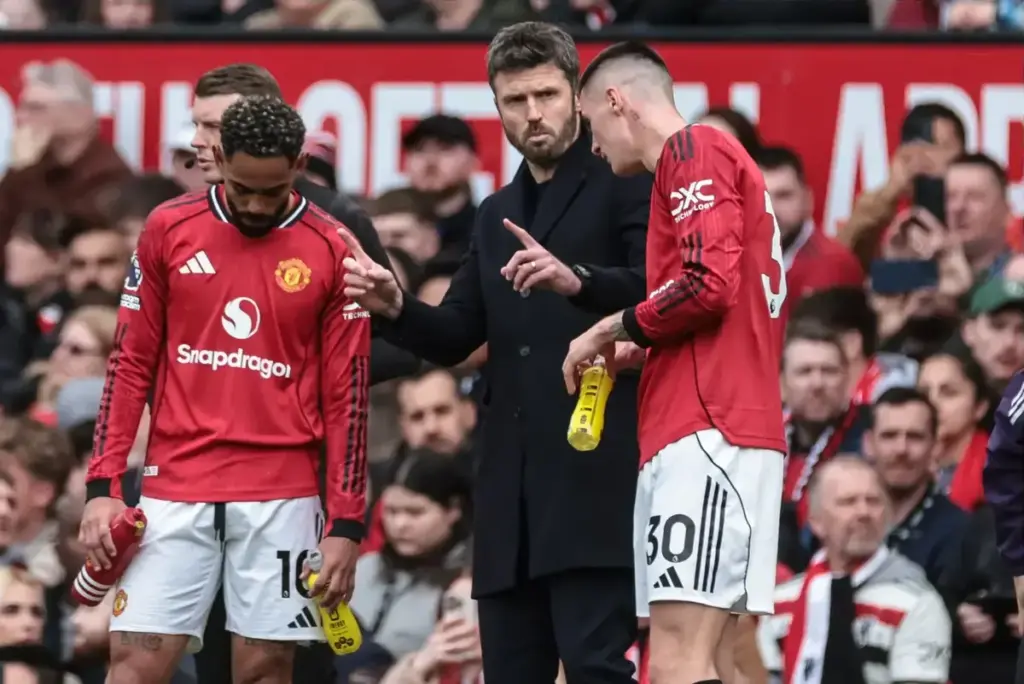

Manchester United sit 12th in the Premier League with five points from five games as the first international break arrives. On results alone, it looks like a stumbling start under Michael Carrick. The club’s data department tells a different story. The Michael Sansoni Manchester United project, built inside the club’s INEOS-backed football operation, exists to explain gaps like this one.
Old Trafford early numbers present a stark tactical paradox
United are not short of attacking presence. They lead the league for touches in the opposition box. They also rank among the best sides for passing accuracy and shots on target, and sit fourth for expected goals. On paper, that reads like a top four attack carrying a relegation battler’s points total.
That contrast has fed the frustration around Old Trafford this month. It sat behind the mood after Roy Keane’s scathing comments post-derby, when the former captain questioned whether this group has the nerve to match its own numbers. The early data suggests the problem is not effort or chance creation. It is conversion.
Michael Sansoni metrics uncover elite volume behind poor position
Under INEOS, United invested heavily in a data and AI department led by Michael Sansoni. He is a former Mercedes Formula One numbers specialist and a University of Southampton graduate. His team was built to strip emotion out of football judgements and replace it with measurable evidence.
Those numbers, detailed in reporting from Manchester Evening News, paint United as one of the most productive attacking sides in the Premier League this season. They rank first in the League for touches in the opposition box, with 182, more than any other club has managed heading into the break.
United also sit second for accurate passes and second for shots on target. That shows a side reaching good areas and testing goalkeepers regularly. Add a fourth-place finish for expected goals, and the volume argument for Carrick’s approach looks stronger than the league table suggests. By pure output, this is an attack doing most things right.
Data highlights alarming conversion gap compared to rivals
United have scored eight goals this season. That return sits well below their expected goals total. The shortfall points to wasted chances rather than a shortage of them. The real story sits in the conversion numbers. United are turning a far smaller share of their shots into goals than the league’s sharpest finishers.
United’s conversion rate stands at 7.1%. Brighton convert 16.8% of their chances, Manchester City 19.1%, and Chelsea 13.9%, despite creating fewer chances by Sansoni’s own volume metrics. For a squad dominating opposition box territory, a finishing rate that lags so far behind is the clearest explanation for United’s league position. Is this simply misfortune wearing off? Or a deeper problem with composure in front of goal?
Carrick debate shifts to Berrada and Wilcox hierarchy decision
Those figures now sit squarely with Omar Berrada and Jason Wilcox, the football hierarchy tasked with judging Carrick’s start. Neither has offered any public signal on how long patience will last. Nothing in the data points to a decision being close.
What the numbers do is complicate the conversation. A manager whose team leads the league for box touches and ranks fourth for expected goals is clearly doing something right tactically. A manager whose team sits 12th, with a conversion rate some way adrift of the league’s best finishers, is presiding over a results crisis his own underlying performance does not fully explain.
Berrada and Wilcox will have to weigh whether Carrick’s process deserves more time to turn those numbers into points. The club, amid recent developments around the academy news, has shown it is willing to back long-term thinking elsewhere at Old Trafford.
For now, Sansoni’s department offers no verdict on Carrick’s future. It simply confirms United’s problem this season is not creation. It is conversion, and closing that gap may decide how long the current setup survives.








Comments.
Loading comments…