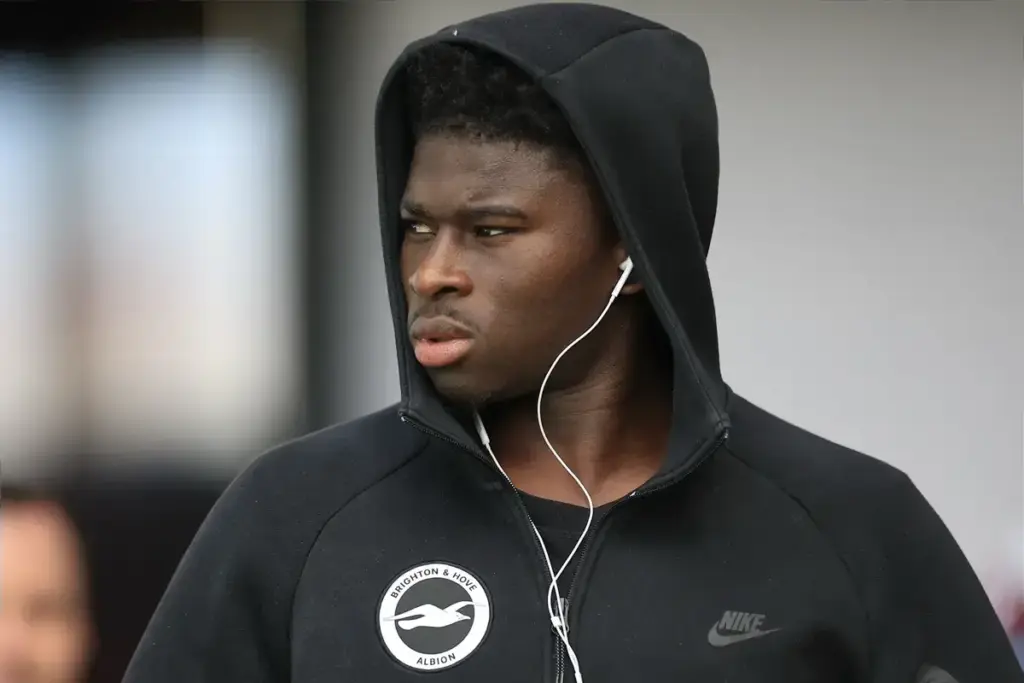

Manchester United fans have waited months, and Carlos Baleba finally has a return date in sight. The £70million midfielder signed to transform Michael Carrick’s engine room, and Old Trafford is ready to find out what all the fuss is about.
Jason Wilcox, United’s technical director, made the club’s thinking plain when the deal was completed. He called Baleba “an elite midfielder with immense potential to develop further”, a verdict many would hope to be true after a massive fee involved. Few signings this summer carried higher expectations.
Manchester United need him more than ever. A midfield short of control and physicality has been exposed too often already this season, and Baleba’s frame and engine were built precisely to fix that.
Old Trafford awaits the return of a £70m powerhouse
Baleba’s move arrived with strings attached. He completed his switch from Brighton while nursing an ankle ligament injury picked up in pre-season, which meant the fanfare around a landmark deal was immediately tempered by a recovery timeline.
That has not dulled the sense of anticipation by a bit. A £70million midfielder does not walk through the door every window, and Wilcox’s endorsement suggests United see him as a long-term name in the centre of the park rather than a short-term fix. Supporters have followed our latest squad talking points closely as they wait for him to feature.
The question now is timing. Every fit senior players matters for a side already searching for form, and Baleba’s return could not come at a more relevant moment. Manchester United’s recent injury problems, including those of Bruno Fernandez have put Michael Carrick in a difficult position.
Tackling off-pitch strain and injury delays
The physical setback was only part of the picture. Fabian Hurzeler, his manager at Brighton, suggested the weight of transfer speculation had taken a toll before the move was even finalised.
“For sure, when a young boy reads that there’s interest from Manchester United with a big, big offer, it might affect him deeply,” Hurzeler said, a rare and honest acknowledgement of how transfer noise can unsettle a young player.
Our assessments of the managerial picture at Brighton covered similar themes around pressure on the club’s brightest talents.
There was more beyond football. Cameroon manager David Pagou revealed that family problems had complicated Baleba’s recovery during international duty, telling ESPN:
“Carlos, had problems, family problems [when he joined us], and it was a question of his mental recovery.”
The recovery has since moved forward steadily. Baleba returned to light grass work in mid-September before rejoining full training with the group, and he travelled with the squad for the trip to Fulham. Small steps, but the direction is the one United needed to see.
The numbers behind Baleba’s rise
Strip away the transfer saga and the data explains exactly why United pursued him so hard. In the 2024/25 season, Baleba was one of only two central midfielders in the Premier League to top 34 km/h, a sprint speed that few in his position can match.
He backed that pace with defensive solidity. Baleba ranked joint sixth among central midfielders for combined tackles and interceptions, racking up 92 across the campaign. Few names came close.
Put those two numbers together and the appeal of Carlos Baleba to Manchester United becomes obvious. He offers rare recovery speed alongside genuine ball winning nous, exactly the profile a struggling midfield has been missing. It is not a stretch to say his statistical ceiling matches his price tag.
Carrick’s midfield dilemma and the path ahead for United
United enter the reopening of the Premier League in 12th place, having collected only five points from their opening five games. That is a stark return for a club of this stature, and it explains the urgency behind Baleba’s return.
Michael Carrick now faces a genuine selection puzzle once Baleba is fully available. Does he restructure the midfield around a player built for both speed and steel, or ease him in gradually given the injury and the emotional strain he has been through? Neither option is straightforward.
A source close to Baleba offered a confident forecast when the deal was struck:
“Mark my words, he will be a success.” United’s league position makes that prediction feel less like bravado and more like necessity.
Full details of the transfer and the context behind it were first outlined in the Manchester Evening News report.
What is clear is that United built this window around raising their physical and defensive standards in midfield, and Baleba was the man chosen to lead that change. His arrival on the pitch, whenever it comes, will be judged against exactly that standard.
Comments.
Loading comments…