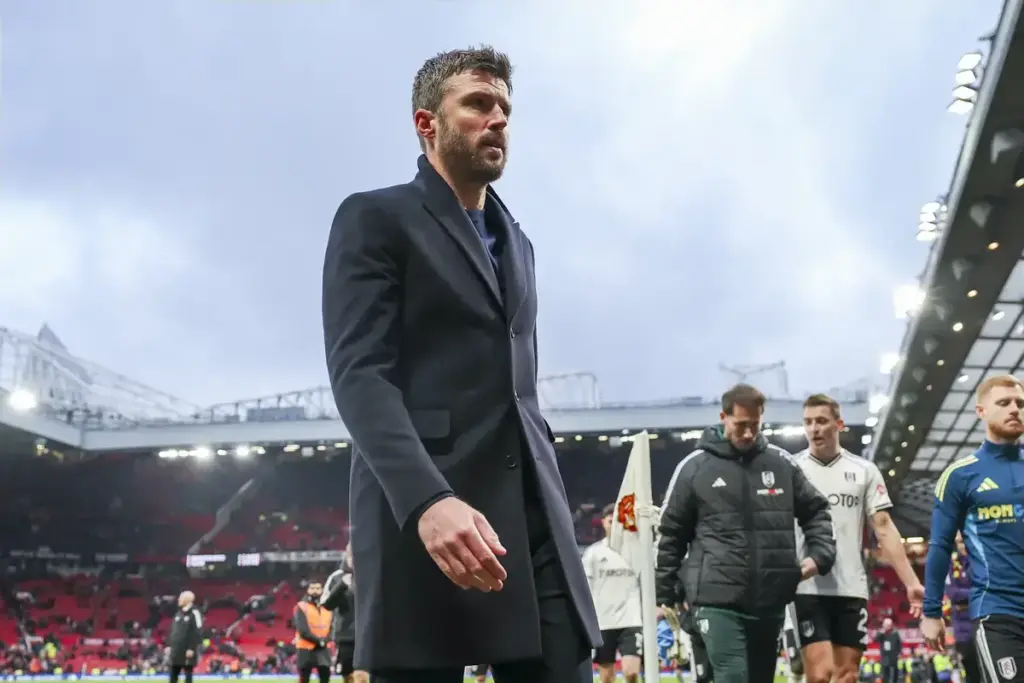

Manchester United’s 2026/27 Premier League schedule looks manageable on paper, but the return of Champions League football makes it a genuine squad examination for Michael Carrick.
The headline is not simply that United have a kind start. It is that the Manchester derby, European restart and heavyweight away days arrive early enough to test rotation, midfield control, defensive durability and wide-forward output before Carrick’s ideas have fully settled.
The Premier League released United’s league fixtures on 19 June, with the official list confirming an opening away trip to Hull City on 22 August, followed by Ipswich at Old Trafford, Everton away, Manchester City at home and Fulham away.
Sky Sports has described United as having a favourable opening run, but the same wider picture shows why that label only tells part of the story.
United have Champions League football back in the calendar. That changes everything.
Why The Fixture List Feels Kind, But Only At First Glance
United’s first five league dates create an obvious opportunity.
Hull, Ipswich, Everton, City and Fulham give Carrick a sequence where momentum is possible if standards are high from day one. That matters because a new full-season manager needs early trust, and the players need evidence that the tactical plan can win repeatedly.
The danger is complacency.
An easy label can hide awkward match types. Newly promoted sides can bring emotion, compact blocks and direct transitions. Everton away before a derby is never a soft rehearsal. Fulham away after City may become a trap if Carrick has emptied the tank.
ReadManUtd has already looked at why Michael Carrick’s fixture list gives Man Utd their first real test, and this Champions League context makes that point sharper.
The league path offers points.
Europe removes recovery days.
That is the real story behind the Man Utd Champions League fixtures debate. Carrick will not only manage opponents. He will manage energy, rotation and rhythm across three-match weeks.
The Opening Stretch Is A Tactical Audition
Carrick’s first full season will be judged by results, but the early weeks will reveal process.
Does United’s press stay coordinated when legs get heavy? Can the team control the ball after European travel? Do the full-backs have enough protection when wingers rotate?
These are not abstract coaching questions. Fixture congestion makes them visible.
United open at Hull, then host Ipswich, before travelling to Everton. Carrick cannot treat that as a gentle warm-up. A strong start would give him selection flexibility before the derby.
Dropped points would turn Manchester City at Old Trafford into an emotional pressure valve rather than a platform.
That is why rotation cannot wait until the Champions League anthem returns.
Carrick has to create rhythm beyond his obvious starters from the opening fortnight.
City And Europe Arrive Before The Season Settles
The derby on 12 September is already a defining occasion.
Placing it in the same week as United’s Champions League return changes the calculation. Carrick must decide whether to prioritise his strongest XI for City, protect key runners for Europe or trust a broader group immediately.
None of those choices is risk-free.
ReadManUtd’s piece on Carrick’s midfield rebuild around Kobbie Mainoo, Ederson and Bruno Fernandes matters here because the midfield will take the first hit from congestion.
Champions League nights often become transition games. United need a midfield that can slow tempo, secure second balls and avoid leaving the centre-backs exposed.
The reported summer move for Ederson, described by The Guardian as an agreed deal with Atalanta, fits that context if completed as expected. It would not solve every issue, but it shows why United have looked at athletic, ball-winning midfield support for the Carrick era.
Where The Schedule Becomes Heavier
The glamour stretch builds through autumn and winter.
United go to Chelsea in October, Liverpool in November and Arsenal in December. Those away matches will expose whether Carrick’s structure travels outside Old Trafford, especially around European weeks.
The reverse sequence matters too.
Liverpool visit Old Trafford on 23 January, Chelsea arrive on 6 February and Arsenal come on 27 February. That run could shape the title race, top-four picture or European qualification battle depending on United’s level by midwinter.
The final day, Manchester United v Fulham on 30 May, also stands out. If Carrick manages the calendar well, that home finale could become a celebration or a decisive assignment.
If not, it may underline missed chances from the supposedly easier opening.
The Four Squad Tests Hidden In The Fixtures
Carrick’s challenge is not only picking teams. It is building repeatable solutions across different match states.
The fixture list will ask four questions quickly.
First, United need midfield control. Champions League nights punish loose distances, especially when teams attack through transitions.
Second, United need wide-forward output. They cannot rely on one flank. Rotated wingers must still create shots, attack the back post and press responsibly.
Third, United need defensive durability. The calendar will stress centre-backs, full-backs and recovery runners. Good rotation prevents small fatigue errors becoming goals.
Fourth, Carrick needs bench trust. If substitutes only operate as emergency options, the schedule wins.
ReadManUtd has already covered how Bruno Fernandes’ Portugal scrutiny gives United another World Cup storyline, and Bruno’s workload will matter once club football returns. United need him influential, not overloaded by every structural problem.
Rotation Cannot Become A September Afterthought
The strongest teams do not discover their squad in a crisis.
They prepare it before the crisis arrives.
For Carrick, that means using the Hull, Ipswich and Everton period to build rhythm beyond the first XI. Early substitutions for high-speed wide players, measured full-back rotation and one senior midfielder kept on the pitch during changes would all make sense.
The point is not rotation for its own sake.
It is continuity with freshness.
Carrick must also manage emotional load. A derby drains players mentally as much as physically. The Champions League return will bring ceremony, noise and scrutiny.
The weekend after Europe may be where discipline matters most because tired teams often lose compactness before effort.
That is why ReadManUtd’s coverage of the Old Trafford pitch rebuild ahead of pre-season fits the bigger picture. Carrick’s season will depend on football details as well as signings.
Edge Cases That Could Reshape Carrick’s Plan
Fixture analysis helps, but football rarely follows the clean version.
United’s September plan could change quickly if the Champions League draw creates a long away trip, if injuries hit one position group, or if a domestic cup tie adds another midweek demand.
There is also a tactical edge case.
If opponents accept United are stronger and sit extremely deep, Carrick may need more creativity than ball security. If opponents target transitions behind aggressive full-backs, he may need a more conservative rest defence.
The same Manchester United fixture list can ask different questions depending on how rivals interpret United’s threat.
That is why squad balance matters more than headline strength.
A bench full of similar profiles can leave a manager stuck. Carrick needs runners, passers, duel-winners, penalty-box threats and defenders comfortable playing when space opens behind them.
What Supporters Should Watch From August To February
Supporters looking beyond results should track a few practical signals.
First, watch substitutions. If Carrick regularly makes proactive changes before matches become stretched, he is managing the season, not only the day.
Second, watch midfield spacing after United lose the ball. Champions League sides will punish loose distances faster than many domestic opponents.
Third, watch the away performances at Chelsea, Liverpool and Arsenal. United do not need perfection in all three, but they need evidence that the structure travels.
Finally, watch how many players look genuinely involved by late September.
If Carrick has already trusted a wider group, the Champions League return becomes less of a shock. If the same names carry every minute, United will have used the generous opening too narrowly.
Verdict: The List Is An Opportunity, Not A Cushion
United’s fixtures offer Carrick a route into the season, but not a hiding place.
The opening run is favourable enough to demand points, while the Champions League return is demanding enough to expose weak planning.
If Carrick rotates with conviction, controls midfield minutes and builds trust beyond his first XI, the schedule can become a launchpad.
If he chases every headline game with the same core, it can become a slow drain.
The next step is simple.
Treat the Premier League list and European calendar together, because Carrick’s season will be defined by how United connect the comfortable dates with the brutal ones.
That is the true squad test now.





Comments.
Loading comments…